
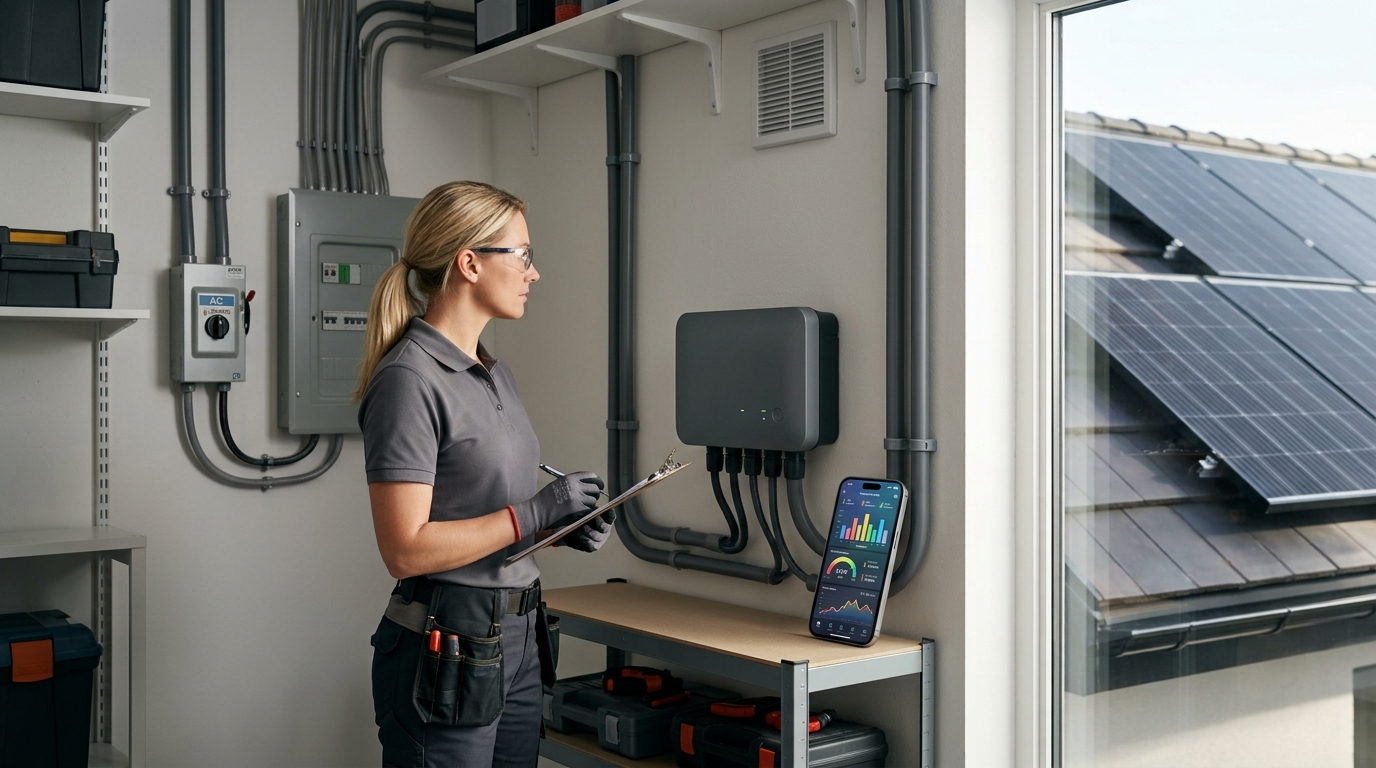
Best Home Energy Monitors in 2026: Top Picks to Track Electricity Usage
Home electricity bills can rise for many reasons, including air conditioners, water heaters, refrigerators, electric vehicle chargers, and appliances that consume power even when they appear to be switched off. Without detailed information about electricity consumption, it can be difficult to identify where the energy is going.
The best home energy monitors in 2026 help homeowners understand electricity usage in real time, identify energy-intensive appliances, track consumption patterns, and make informed decisions about reducing energy costs. Depending on the model, these devices can measure the entire home, monitor individual electrical circuits, or track the energy consumption of a single appliance.
Some energy monitors also support solar power systems, smart home automation, and alerts for unusually high electricity consumption.
In this guide, we compare the leading home energy monitoring options, explain their features and limitations, and help you choose the right system for your home, budget, and energy-saving goals.
Quick Comparison: Best Home Energy Monitors in 2026
The following options serve different needs, from detailed circuit-level monitoring to local energy measurement and simple plug-in tracking.
| Home Energy Monitor | Best For | Main Strength | Installation Type |
|---|---|---|---|
| Emporia Vue 3 | Most homeowners | Whole-home and individual circuit monitoring | Electrical panel |
| Sense Home Energy Monitor | Appliance usage insights | Software-based appliance detection | Existing compatible hardware or supported utility connection |
| Shelly Pro 3EM | Advanced users and three-phase systems | Detailed phase-level measurements and local integrations | Electrical panel or DIN rail |
| Eyedro Energy Monitor | Basic whole-home monitoring | Straightforward electricity tracking | Depends on model |
| Plug-in Electricity Meter | Individual appliances | Simple measurement of one connected device | Wall outlet |
| Smart Electrical Panel Monitoring | Advanced home energy management | Circuit-level monitoring and load control | Professional electrical installation |
Important: Product availability, compatibility, and pricing vary by country. Sense’s original panel-monitor product sales changed at the end of 2025, so buyers should verify the availability and support status of any hardware they are considering.
1. Emporia Vue 3: Best Overall Home Energy Monitor
The Emporia Vue 3 is a strong choice for homeowners who want to understand both total household electricity consumption and the usage of individual circuits. It combines a central monitoring unit with current sensors that measure electrical flow through selected wires in the electrical panel.
Instead of relying entirely on estimates, the system can measure specific circuits directly. This is useful when you want to understand how much electricity your air conditioner, water heater, dryer, kitchen appliances, or other major loads consume.
Key Features
- Real-time household electricity monitoring.
- Optional circuit-level monitoring using additional sensors.
- Historical consumption charts and usage reports.
- Configurable notifications for unusual consumption.
- Solar production and net-energy monitoring support in compatible configurations.
- Mobile and web-based energy tracking.
- Integration with compatible energy-management equipment.
Why Choose Emporia Vue 3?
The main advantage is visibility. A standard electricity bill shows total consumption over a billing period, while a circuit-level monitor can help explain which electrical loads contribute to that total.
For example, if your monthly bill increases during summer, you can compare the consumption of your air conditioner with other household circuits. If your water heater operates more frequently than expected, its circuit readings may help you investigate further.
The system can support monitoring of up to 16 selected branch circuits per unit, depending on the configuration and sensor setup. Homeowners with larger monitoring requirements may need additional equipment.
Limitations
The Vue 3 requires compatible electrical-panel access, appropriate sensor installation, and a suitable network connection for its connected features. Installation can be more complicated than setting up a plug-in meter.
Circuit measurements also require correct sensor placement and configuration. A monitor does not automatically guarantee lower bills; you must use the information to change consumption patterns or improve equipment efficiency.
Best for: Homeowners who want detailed electricity usage information without replacing their existing electrical panel.
2. Sense Home Energy Monitor: Best for Appliance Detection Insights
Sense became well known for using software to identify the electrical signatures of appliances. Rather than installing a separate sensor on every circuit, this approach analyzes patterns in the home’s electricity consumption and attempts to identify individual devices.
Depending on the hardware, software, and supported configuration, this can help users discover when major appliances operate and estimate how much energy they consume.
Key Features
- Whole-home electricity monitoring.
- Historical energy consumption reports.
- Software-based appliance identification.
- Notifications and consumption insights.
- Solar monitoring capabilities in compatible configurations.
- Support for certain major loads, depending on the system.
Benefits of Appliance Detection
Appliance detection can make energy data easier to understand. Instead of seeing only a total consumption figure, users may receive estimates or activity information associated with particular appliances.
This can be useful when investigating questions such as:
- Does my refrigerator operate more frequently than expected?
- How often does my air conditioner switch on?
- Which large appliances contribute most to my electricity use?
- Does my home have an unexpectedly high overnight electricity load?
However, appliance identification is not always exact. Similar electrical signatures, overlapping appliance activity, and equipment differences can affect the accuracy of identification.
Important Buying Consideration
Sense changed its direct hardware sales model at the end of 2025. In 2026, consumers should check whether the required hardware is available in their region, whether an existing unit is supported, and whether a compatible utility-based service is offered.
Best for: Homeowners interested in software-generated appliance insights who can confirm that a compatible, supported setup is available.
3. Shelly Pro 3EM: Best for Advanced Monitoring and Three-Phase Systems
The Shelly Pro 3EM is designed for users who want detailed electrical measurements and more control over how energy data is collected and integrated into a smart home.
It measures electrical parameters across multiple phases and is particularly useful in installations where three-phase monitoring is required. Depending on the configuration, it can report voltage, current, active power, and accumulated energy.
Key Features
- Three-phase electricity monitoring.
- Detailed measurements for individual phases.
- Local network connectivity and data access.
- Integration options for compatible automation systems.
- Support for advanced monitoring workflows.
- Solar and energy-management use cases.
Why Advanced Users May Prefer Shelly
Some homeowners want more than a simple mobile application. They may want to connect energy readings to a home automation platform, create custom dashboards, or trigger automations based on power consumption.
A compatible local integration can help users build rules such as sending an alert when a large load operates or recording electricity consumption in a centralized dashboard.
Its phase-level measurements can also be valuable for diagnosing uneven loads in compatible three-phase systems.
Limitations
The Shelly Pro 3EM is more technical than many consumer-focused monitors. Buyers need to confirm that the model, current sensors, electrical supply, and installation arrangement suit their property.
It is also important to understand that monitoring a few electrical measurement channels is not the same as independently measuring every branch circuit in a home.
Best for: Technically confident homeowners, smart home enthusiasts, and properties requiring three-phase energy measurements.
4. Eyedro Energy Monitor: Best for Straightforward Energy Tracking
Eyedro offers home energy monitoring products designed to help users observe electricity consumption and understand changes in usage over time. The exact features depend on the model and configuration.
For homeowners who primarily want to see how much electricity their property uses, a straightforward monitoring system may be sufficient.
Key Features to Consider
- Whole-home electricity monitoring on compatible models.
- Real-time or near-real-time consumption information.
- Historical usage reports.
- Energy tracking through a connected interface.
- Optional capabilities that vary by product version.
What Makes It Useful?
Not every household needs advanced appliance detection, custom automation, or extensive circuit-level data. Some users simply want to compare electricity consumption across different days, understand peak usage periods, and see whether changes in household routines make a difference.
A simpler monitor may help answer these questions without requiring a more complex energy-management setup.
What to Check Before Buying
Eyedro product configurations may differ in their sensor arrangements, connectivity, and supported electrical systems. Review the exact model specifications and confirm compatibility before purchasing.
Best for: Homeowners who prioritize basic electricity tracking over advanced automation.
5. Plug-in Electricity Meters: Best for Monitoring Individual Appliances
A plug-in electricity meter is often the easiest and least expensive way to measure the energy consumption of a single appliance.
The meter connects between a compatible wall outlet and the appliance. It then measures the electricity used by that connected device.
Unlike panel-mounted monitors, plug-in meters generally do not require access to the electrical panel.
Key Features
- Simple installation.
- Measurement of the connected appliance’s electricity use.
- Energy readings over selected periods.
- Useful information for estimating running costs.
- Often lower purchase and setup costs than whole-home systems.
What Can You Monitor?
Depending on the meter’s electrical rating and outlet compatibility, suitable examples may include:
- Desktop computers and monitors.
- Televisions and entertainment systems.
- Fans and smaller household appliances.
- Small refrigerators.
- Standby power consumption from compatible devices.
Always check the meter’s supported voltage, current, plug type, and maximum power rating before connecting an appliance.
How to Estimate Appliance Running Costs
You can estimate the electricity cost of a device using this formula:
Electricity cost = Energy consumption in kWh × Electricity price per kWh
For example, suppose a device consumes 2 kWh in one day and your electricity rate is $0.20 per kWh.
Daily cost = 2 × $0.20 = $0.40
Estimated 30-day cost = $0.40 × 30 = $12
This is an illustrative calculation, not a universal electricity rate. Your actual bill may include taxes, fixed charges, time-of-use rates, and other fees.
Limitations
A plug-in meter measures only the appliance connected through it. It cannot independently monitor the entire home or equipment that is permanently wired into the electrical system.
Best for: Renters, budget-conscious users, and homeowners investigating the consumption of one or two appliances.
6. Smart Electrical Panel Monitoring: Best for Advanced Home Energy Management
Smart electrical panel systems provide more advanced monitoring and, depending on the product, the ability to manage or control selected circuits.
Unlike a basic energy monitor, a smart panel may support features such as circuit prioritization, load management, and coordination with backup batteries or other energy equipment.
Key Features
- Circuit-level energy visibility.
- Load management in supported configurations.
- Monitoring for large electrical loads.
- Potential integration with home backup systems.
- Better visibility into circuits during power outages when supported by the system.
Who Should Consider a Smart Panel?
A smart panel may be worth evaluating if you are planning a major electrical upgrade, installing home battery backup, adding an electric vehicle charger, or managing several high-demand appliances.
For example, a home with an electric vehicle charger, an electric water heater, and a large air conditioner may need better load management to avoid exceeding its available electrical capacity.
A smart panel can help manage selected loads when the installed system supports those functions.
Limitations
Smart panels are generally much more expensive than monitoring-only devices. They may require replacing or modifying electrical equipment, professional installation, permits, and compatibility checks.
If your only goal is to discover why your electricity bill is high, a conventional energy monitor may provide enough information at a substantially lower cost.
Best for: Homeowners planning electrical upgrades, battery backup, or advanced whole-home energy management.
Home Energy Monitor Types Compared
Choosing the correct type is often more important than choosing a particular brand. Each category answers a different energy question.
| Monitor Type | What It Measures | Typical Cost Level | Installation Difficulty |
|---|---|---|---|
| Plug-in electricity meter | One connected appliance | Low | Easy |
| Whole-home monitor | Total household electricity consumption | Moderate | Moderate to high |
| Circuit-level monitor | Total usage plus selected circuits | Moderate | Moderate to high |
| Smart electrical panel | Circuit usage and, in supported systems, load control | High | High |
| Utility-connected monitor | Data supplied by a compatible smart meter | Low to moderate | Easy to moderate, depending on the system |
These are relative cost categories rather than fixed prices. Actual costs depend on the product, sensor package, electrical system, installation, taxes, and availability in your country.
How Do Home Energy Monitors Work?
Most home energy monitors use sensors or electricity-metering components to measure how power moves through an electrical system.
The collected information is processed by the device and presented through an app, web dashboard, display, or compatible automation platform.
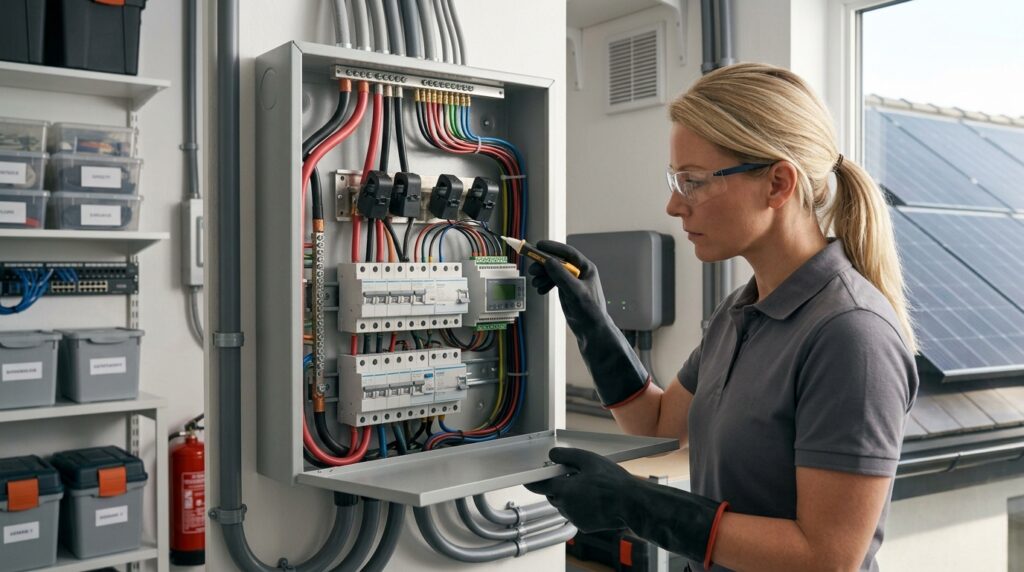
1. Current Sensors Measure Electrical Flow
Many panel-mounted monitors use current transformers, often called CT sensors. These sensors measure electrical current without requiring the monitor to interrupt the conductor being measured.
The monitor combines current readings with other electrical measurements and configuration details to estimate or calculate power and energy consumption.
2. The Monitor Calculates Power and Energy
Power is generally expressed in watts or kilowatts. It indicates how quickly electrical energy is being consumed at a particular moment.
Energy is measured in watt-hours or kilowatt-hours. It represents the amount of electricity consumed over time and is commonly used for electricity billing.
For example, a 1,000-watt appliance operating continuously for two hours consumes approximately 2 kWh of energy.
Actual electrical calculations can be more complicated for alternating-current systems, especially when power factor and phase configuration are involved.
3. Data Is Displayed in an App or Dashboard
Depending on the model, users may be able to view:
- Current household power demand.
- Daily, weekly, and monthly energy consumption.
- Individual circuit usage.
- Historical consumption trends.
- Solar production and grid imports or exports.
- Notifications for selected consumption conditions.
Some systems depend on cloud services, while others offer local network access or integration options. Buyers should understand these differences before choosing a device.
4. Users Turn Information into Savings
The monitor itself does not necessarily reduce electricity consumption. Its value comes from helping users identify waste, change operating schedules, adjust equipment settings, and decide when an appliance needs maintenance or replacement.
Key Benefits of Using a Home Energy Monitor
1. Identify Energy-Intensive Appliances
A monitor can help you understand which appliances or circuits account for a significant portion of your home’s electricity consumption.
This information can be particularly useful for air conditioning, electric heating, water heating, clothes drying, pool equipment, and electric vehicle charging.
2. Understand Unexpected Electricity Bills
If consumption rises suddenly, historical data may help identify when the increase started and which monitored circuits contributed to it.
For example, an increase in air-conditioning consumption might reflect hotter weather, longer operating hours, a changed thermostat setting, or an equipment issue. A monitor provides evidence to investigate rather than a diagnosis by itself.
3. Reduce Standby Electricity Use
Many devices consume electricity while waiting for commands, maintaining network connections, or powering internal electronics.
A plug-in meter or circuit-level monitor can help determine whether standby consumption is meaningful enough to address.
4. Improve Solar Energy Awareness
Some compatible monitors can compare solar generation with household demand and grid imports or exports.
This can help solar owners decide when to operate flexible loads, such as certain appliances or EV charging equipment, to use more of their available solar electricity.
However, solar monitoring requires compatible sensors, correct configuration, and support for the property’s solar and electrical arrangement.
5. Support Smarter Energy Decisions
Historical data can help homeowners compare different operating schedules, assess changes in equipment, and prioritize improvements.
Instead of replacing several appliances at once, you can use measurements to investigate the loads most likely to affect your bill.
How to Choose the Best Home Energy Monitor
Before buying a home energy monitor, consider the following factors.
1. Decide What You Want to Measure
Start with the question you want to answer.
- If you want to measure one appliance, choose a suitable plug-in meter.
- If you want to understand total household consumption, consider a whole-home monitor.
- If you need to identify the consumption of individual circuits, choose a circuit-level system.
- If you need load control and electrical management, investigate compatible smart panels.
Buying a more complicated device than you need can increase costs without providing useful additional information.
2. Check Electrical Compatibility
Electrical systems vary between countries and properties. Before buying, verify:
- Supported voltage and frequency.
- Single-phase or three-phase compatibility.
- Maximum current and power ratings.
- Current-transformer sensor size and range.
- Electrical panel layout and available space.
- Whether the system supports the wiring arrangement in your home.
A product intended for one market may not be suitable for another without a compatible model or installation arrangement.
3. Compare Whole-Home and Circuit-Level Monitoring
Whole-home monitoring is useful for understanding total consumption. Circuit-level monitoring provides more detail about selected electrical loads.
If your main concern is an air conditioner or water heater, direct circuit monitoring may be more useful than software attempting to identify the appliance from whole-home readings.
4. Review App Features and Data Access
Look at the information the system stores and how you can access it.
Useful features include historical graphs, downloadable reports, notifications, and clear comparisons between time periods.
If privacy and long-term access are important, investigate whether the monitor requires an online account, depends on a cloud service, or offers local data access.
5. Consider Solar and Battery Compatibility
If your home has solar panels, a hybrid inverter, or a battery system, confirm that the monitor can measure the relevant flows.
Some systems track household consumption only, while others can measure solar production and grid exchange with additional sensors or supported integrations.
Do not assume that every home energy monitor automatically works with every solar inverter or battery.
6. Calculate the Total Cost
The purchase price is only one part of the cost. Include any additional sensors, compatible accessories, installation labor, required subscriptions, and potential electrical modifications.
A low-cost device that measures only one appliance may be ideal for a small task. A whole-home system may be more cost-effective if you need ongoing information about multiple circuits.
7. Check Accuracy and Limitations
Review the manufacturer’s accuracy specifications and the conditions under which they apply.
Sensor positioning, installation quality, electrical configuration, and measurement methods can affect readings. Appliance detection based on software may also produce estimates rather than direct measurements.
Treat energy-monitor readings as a practical tool for understanding consumption, not automatically as a replacement for a utility billing meter.
How Much Do Home Energy Monitors Cost in 2026?
The cost depends on the type of monitor, the number of circuits measured, installation requirements, and the features included.
| Category | Relative Budget | Main Consideration |
|---|---|---|
| Basic plug-in meter | Lowest | Measures one compatible appliance |
| Whole-home monitor | Moderate | Tracks overall household usage |
| Circuit-level monitoring system | Moderate to higher | Requires more sensors and installation work |
| Advanced local energy monitoring | Moderate to higher | May require networking or integration knowledge |
| Smart electrical panel | Highest | Can involve major electrical work and professional installation |
Treat these categories as a starting point rather than a quote. Prices and availability differ between regions, and installation can cost more than the monitor itself.
When comparing prices, check exactly what is included. A base monitor may not include all the sensors required for detailed circuit monitoring.
Can a Home Energy Monitor Really Save Money?
Yes, a home energy monitor can help reduce electricity costs, but savings are not guaranteed.
The monitor provides information. Savings depend on whether that information leads to useful changes.
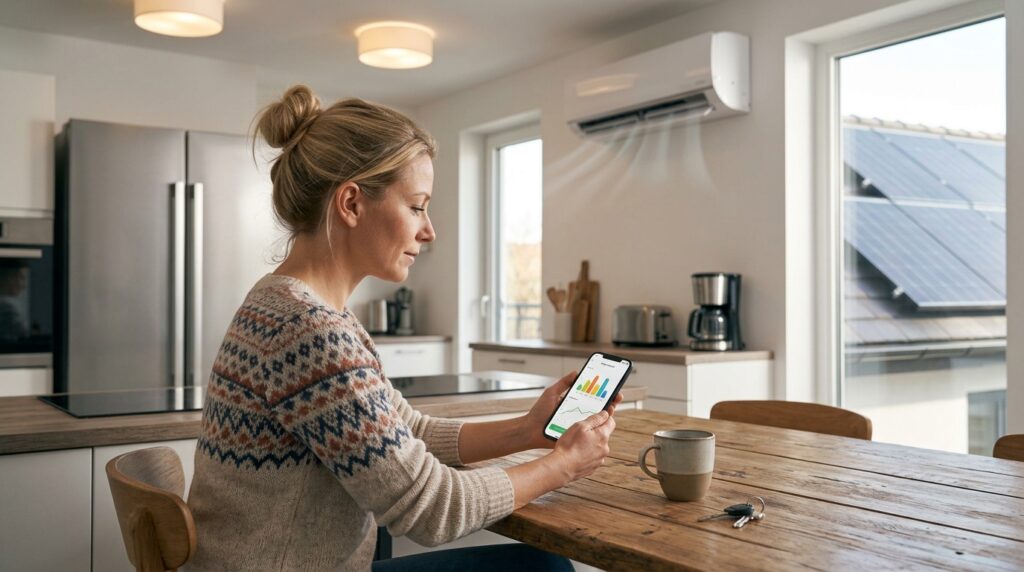
For example, suppose a household discovers that a particular appliance consumes an additional 30 kWh per month beyond what the owners expected. At an illustrative rate of $0.20 per kWh, that difference represents $6 per month.
If the household can safely reduce that consumption, the potential saving is approximately $6 per month at that rate. Actual savings will depend on the real consumption, tariff, and changes made.
Practical Ways to Use Energy Data
- Adjust air-conditioning settings without sacrificing necessary comfort.
- Reduce unnecessary standby loads.
- Run suitable appliances during lower-cost periods when time-of-use pricing applies.
- Investigate unusually high consumption from major equipment.
- Coordinate flexible loads with solar production when supported.
- Compare electricity usage before and after efficiency improvements.
A monitor is most valuable when it identifies an issue that can realistically be corrected.
Common Mistakes to Avoid When Buying an Energy Monitor
Choosing Appliance Detection Instead of Direct Measurement
Software-based appliance identification can be convenient, but it may not correctly identify every device. If you need reliable information about a particular circuit, direct circuit measurement may be more appropriate.
Ignoring Installation Requirements
Panel-mounted monitors involve electrical equipment and may require a qualified electrician. Do not assume that every product is safe or compatible for self-installation.
Overlooking Ongoing Costs
Check for subscription fees, optional accessories, sensor bundles, and any additional costs for data access or automation features.
Expecting Automatic Bill Reductions
An energy monitor does not automatically make appliances more efficient. It helps you identify opportunities to change consumption or investigate problems.
Ignoring Data Privacy
Review how energy data is stored, how the device connects to the internet, and whether cloud access is required. Household consumption patterns can reveal information about daily routines, so privacy should be part of the buying decision.
Frequently Asked Questions About Home Energy Monitors
1. What is the best home energy monitor in 2026?
The Emporia Vue 3 is a strong overall choice for homeowners who want whole-home and individual circuit monitoring. Shelly Pro 3EM is better suited to advanced users who need three-phase measurements and local integrations. A plug-in meter is often the best starting point for one appliance.
2. Do home energy monitors reduce electricity bills?
They can help reduce bills by identifying unnecessary consumption and showing where electricity is being used. However, savings depend on the changes you make after reviewing the data.
3. Are home energy monitors accurate?
Accuracy depends on the device, installation, sensor placement, and electrical configuration. Direct circuit measurements can provide detailed information, while software-based appliance detection may generate estimates that are not always exact.
4. Can an energy monitor identify which appliance uses the most electricity?
Some systems measure selected circuits directly, while others attempt to identify appliances through software analysis. Circuit-level monitoring is usually more suitable when you need to measure a known hardwired load.
5. Can I install a home energy monitor myself?
Plug-in meters are generally straightforward to set up when used within their ratings. Panel-mounted systems may expose users to hazardous electrical components and should be installed by a qualified professional when required by local rules or product instructions.
6. Do energy monitors work with solar panels?
Some do. Solar compatibility depends on the model, sensor arrangement, electrical system, and supported configuration. Check whether the device can separately measure solar generation, household consumption, and grid exchange if you need all three.
7. Can a home energy monitor work without Wi-Fi?
It depends on the product. Some devices require internet connectivity for their app or cloud features, while others offer local communication or a display-based interface. Verify offline functionality before purchasing.
8. What is the difference between a whole-home monitor and a circuit-level monitor?
A whole-home monitor measures total household consumption. A circuit-level monitor adds measurements for selected individual circuits, helping you understand which electrical loads contribute to the total.
9. Are smart plugs the same as energy monitors?
Not exactly. Some smart plugs include energy measurement and can track a compatible connected appliance. A whole-home energy monitor measures electricity at a broader level and may also support hardwired circuits.
10. Can an energy monitor detect faulty appliances?
It may help identify unusual consumption patterns, but it cannot reliably diagnose every electrical or mechanical fault. If an appliance behaves abnormally, trips a breaker, overheats, or produces a burning smell, stop using it when safe and arrange a qualified inspection.
11. Is a home energy monitor worth buying for a small home?
It can be useful if electricity costs are difficult to explain or if you want to measure specific appliances. A basic plug-in meter may be sufficient if you only need to investigate one or two devices.
12. Do I need an energy monitor if I already have a smart meter?
Not necessarily. A smart meter may already provide useful consumption information, depending on your utility and available services. An additional monitor is most useful when you need more frequent readings, circuit-level detail, or features your existing meter does not provide.
13. Can I use an energy monitor with a battery backup system?
Some monitors can track compatible battery and solar energy flows, but support varies. Confirm whether the system can distinguish grid power, solar generation, battery charging, and battery discharge in your specific installation.
14. What should I check before buying an energy monitor in another country?
Check voltage, frequency, phase compatibility, sensor ratings, electrical-panel requirements, plug type, app availability, connectivity, and local installation rules. A device designed for a different electrical system may not be compatible with your property.
Conclusion: Which Home Energy Monitor Should You Buy in 2026?
The best home energy monitor depends on how much detail you need and how you plan to use the information.
For most homeowners who want a combination of whole-home and selected circuit-level measurements, the Emporia Vue 3 is a strong option to consider. For advanced users who need three-phase measurements and local automation capabilities, the Shelly Pro 3EM may be a better fit. Sense can be worth considering when its supported hardware or compatible service is available, while Eyedro offers another option for straightforward electricity tracking.
If you only need to measure a television, computer, fan, or another compatible plug-in appliance, a basic electricity meter may provide all the information you need.
Before purchasing, check electrical compatibility, installation requirements, sensor coverage, data privacy, and the total cost. Most importantly, choose a monitor that answers a real question about your energy use. When you understand where electricity goes, you can make better decisions about efficiency, equipment, and household energy costs.