How Much Do Solar Panels Cost for a Home in 2026? Complete Pricing Guide
Installing solar panels is one way homeowners can reduce electricity bills, generate their own power, and become less dependent on traditional energy sources. However, the total cost of a residential solar system depends on several factors, including system size, panel efficiency, inverter type, roof condition, installation labor, and whether you need battery storage.
So, how much do solar panels cost for a home in 2026? The answer depends on where you live and what you want your solar system to do. A basic grid-connected system is generally less expensive than a solar-plus-battery setup designed to provide backup power during outages.
This guide explains residential solar panel costs, typical system sizes, installation expenses, battery prices, potential electricity savings, financing options, and the most important factors to consider before buying a system.
How Much Do Solar Panels Cost for a Home in 2026?
In 2026, the cost of a home solar system varies considerably by country, local electricity prices, equipment quality, and installation requirements. A small system designed to offset part of a household’s electricity use costs less than a large system intended to cover most of its annual consumption.
For homeowners in the United States, a rough planning range for a professionally installed residential solar system is approximately $2.25 to $3.50 per watt before applicable incentives. This is a general budgeting estimate, not a guaranteed installation quote. Local labor rates, equipment choices, roof complexity, and market conditions can move the final price outside this range.
Estimated Solar Panel System Costs by Size
The following estimates use the planning range above and represent an installed system before battery storage and potential incentives.
| Solar System Size | Estimated Installed Cost | Typical Use |
|---|---|---|
| 3 kW | $6,750–$10,500 | Small home or partial electricity offset |
| 5 kW | $11,250–$17,500 | Small to medium household |
| 6 kW | $13,500–$21,000 | Medium household |
| 8 kW | $18,000–$28,000 | Larger household or higher electricity use |
| 10 kW | $22,500–$35,000 | Large home or high energy demand |
| 12 kW | $27,000–$42,000 | High-consumption home |
These figures are illustrative estimates for a US-style installed-cost market. They are not universal prices and may exclude battery storage, major electrical upgrades, roof repairs, unusual permitting requirements, and other additional work.
Important: A larger solar system does not automatically provide a better financial return. The right size is the one that matches your electricity use, roof conditions, local solar production, and utility billing rules.
What Is Included in the Cost of a Home Solar System?
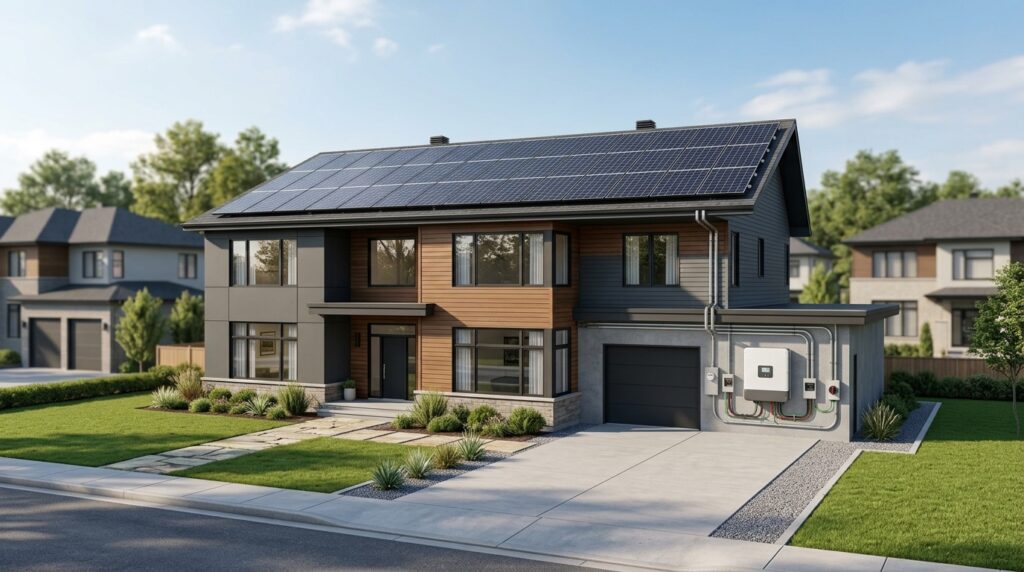
Solar panels are only one part of a complete installation. A working system also requires equipment to convert electricity, mount the panels, connect components safely, and monitor energy production.
1. Solar Panels
Solar panels capture sunlight and convert it into direct-current electricity. Their price depends on power output, efficiency, manufacturer, warranty, and technology.
Higher-efficiency panels can produce more electricity from limited roof space. However, they may cost more upfront, so they are not automatically the best option for every home.
Common residential panel technologies include:
- Monocrystalline panels: Widely used for residential installations because of their efficiency and space-saving potential.
- N-type panels: A broad category of modern solar cells that can offer strong efficiency and performance characteristics.
- Bifacial panels: Designed to capture sunlight on both sides under suitable installation conditions. Their additional production depends on mounting height and reflected light.
- Older or lower-efficiency panels: May cost less but generally require more space to produce the same amount of power.
When comparing panel prices, check the wattage, efficiency, product warranty, performance warranty, and expected degradation rate rather than choosing solely by brand name.
2. Solar Inverter
Solar panels produce direct-current electricity, while most household appliances use alternating-current electricity. An inverter converts the electricity into a usable form.
The three main options are:
String inverter: Connects a group of panels to one central inverter. It is often a cost-effective choice for roofs with consistent sunlight and minimal shading.
Microinverters: Small inverters installed at individual panels. They can be useful on roofs with multiple orientations or partial shading, but they may increase the initial equipment cost.
Hybrid inverter: Can coordinate solar panels and compatible battery storage. It is useful if you want to add a battery now or in the future, provided the system is designed for that purpose.
The inverter’s capacity should match the planned solar array and household requirements. An inexpensive inverter may not be the best value if it has limited monitoring, poor warranty support, or inadequate compatibility with your intended battery.
3. Mounting Structure and Installation Hardware
Panels need a secure mounting system designed for the roof type and local weather conditions. The mounting structure must account for wind loads, roof materials, waterproofing, and the panel layout.
Typical hardware includes:
- Roof rails or mounting brackets
- Clamps and fasteners
- Electrical cables and connectors
- Conduit and protective equipment
- Grounding and bonding components
- Weatherproofing materials
Ground-mounted systems may require additional posts, foundations, trenching, and land preparation. These costs can make them more expensive than a straightforward rooftop installation.
4. Labor and Installation
Professional installation covers more than placing panels on a roof. Depending on the project, it can include system design, electrical work, roof assessment, equipment mounting, inspections, testing, and commissioning.
Labor costs tend to increase when a home has a steep roof, difficult access, multiple roof surfaces, complex wiring, or an outdated electrical system.
5. Permits, Inspections, and Electrical Upgrades
Some installations require permits, inspections, utility approval, or an upgrade to the home’s electrical panel. The requirements vary by location and system type.
Possible additional expenses include:
- Electrical panel replacement
- Roof repairs before installation
- New wiring or conduit
- Meter or utility connection work
- Engineering assessments
- Permit and inspection fees
Ask your installer to identify which of these items are included in the written quote.
How Much Do Solar Panels Cost by System Type?
The system configuration has a major impact on the total price. The three most common choices are grid-tied solar, hybrid solar, and off-grid solar.
Grid-Tied Solar Systems
A grid-tied system connects to the local electricity grid. It supplies electricity to your home when sunlight is available, while the grid can provide power when solar production is insufficient.
Advantages:
- Usually has a lower upfront cost than a comparable solar-plus-battery system.
- Does not require battery replacement expenses.
- Can reduce the amount of electricity purchased from the utility.
- Is often suitable for homes with reliable grid access.
Limitations:
- Most standard grid-tied systems shut down during a grid outage for electrical safety.
- Savings depend on local electricity rates and rules for exporting excess power.
- You may still receive an electricity bill because of fixed charges or nighttime consumption.
A grid-tied system is often worth considering if your primary goal is reducing electricity costs rather than maintaining power during outages.
Hybrid Solar Systems
A hybrid system combines solar panels with an inverter designed to work with battery storage. Depending on the equipment, a battery can be installed immediately or added later.
Advantages:
- Can store surplus solar energy for later use.
- May provide backup power during outages when correctly configured.
- Offers flexibility for households that want to increase energy independence.
- Can help shift solar energy use toward evening hours.
Limitations:
- Batteries increase the initial investment.
- Backup operation may require a dedicated backup circuit or additional equipment.
- Battery capacity and power output limit what can run during an outage.
- Battery warranties and replacement costs should be included in long-term planning.
Hybrid systems are attractive for homes that experience frequent power interruptions or use substantial electricity after sunset.
Off-Grid Solar Systems
An off-grid system operates without relying on a normal utility connection. It generally requires enough solar generation and battery capacity to cover electricity use during periods of low sunlight.
Depending on the location and reliability requirements, it may also need a backup generator.
Off-grid systems can be useful for remote properties, but they usually require more careful design and may cost considerably more than grid-tied systems. Underestimating battery capacity or winter solar production can result in power shortages.
Solar System Type Comparison
| Feature | Grid-Tied | Hybrid | Off-Grid |
|---|---|---|---|
| Connects to utility grid | Yes | Usually | No |
| Battery required | No | Optional or included | Usually essential |
| Backup during outage | Usually not without special equipment | Possible with suitable configuration | Yes, within system limits |
| Initial cost | Usually lowest | Higher with battery | Often highest |
| Best for | Reducing electricity bills | Savings plus backup | Remote or independent power |
| Design complexity | Low to moderate | Moderate to high | High |
How Much Does Solar Battery Storage Add to the Price?
Battery storage is one of the largest optional expenses in a residential solar project. It allows electricity generated during the day to be used later, but the battery’s cost depends on its usable capacity, power output, chemistry, inverter compatibility, installation requirements, and warranty.
For an illustrative US-market budget, a professionally installed home battery may add several thousand dollars to the project. Larger storage systems or installations requiring extra electrical work can cost significantly more.
Estimated Battery Storage Budget
| Battery Capacity | General Use | Budget Consideration |
|---|---|---|
| 5 kWh | Essential appliances for a limited period | Lower storage cost, limited runtime |
| 10 kWh | More essential loads or longer backup | Mid-sized storage investment |
| 15 kWh | Greater evening use or longer backup | Higher upfront cost |
| 20 kWh or more | Larger energy needs | Requires careful load and runtime planning |
These are capacity categories, not fixed price quotations. Actual prices differ significantly by market and installation design.
Should You Buy Solar Panels With a Battery?
A battery may be worthwhile if you:
- Experience frequent or lengthy power outages.
- Pay high electricity rates during evening hours.
- Receive limited compensation for exporting surplus solar energy.
- Want to run selected appliances during outages.
- Have a compatible system and a suitable location for battery installation.
A battery may be less financially attractive if your grid is reliable, your utility pays well for exported electricity, or your household uses most of its power while the sun is shining.
Before purchasing storage, compare the battery’s total installed cost with the value of the electricity it can realistically store and deliver over its useful life.
What Factors Affect Solar Panel Installation Costs?
Two homes with the same number of solar panels can receive very different installation quotes. The following factors explain why.
1. System Size and Electricity Consumption
A home’s electricity usage is one of the most important starting points. A household with air conditioning, electric heating, an electric vehicle, or a pool may need a larger array than a household with fewer high-power appliances.
Review at least 12 months of electricity bills if possible. Seasonal changes matter because heating and cooling can significantly increase demand at different times of the year.
2. Roof Size, Condition, and Orientation
A large, unobstructed roof can make installation easier. A roof with multiple angles, heavy shading, fragile materials, or limited usable space may require extra design work.
If the roof needs replacement soon, completing that work before installing solar panels can avoid the expense of removing and reinstalling the array later.
3. Sunlight and Local Climate
Solar panels can generate electricity in many climates, but production varies with location, season, shading, temperature, and weather.
A system in a sunny region may produce more electricity from the same installed capacity than one in a cloudier location. High temperatures can also reduce panel output under certain conditions.
Ask for a location-specific production estimate rather than relying on a generic claim about how much electricity a particular system will generate.
4. Panel Efficiency and Quality
High-efficiency panels can be useful when roof space is limited. However, a panel with a higher efficiency rating may not offer enough extra energy production to justify a higher price on a large, unshaded roof.
Compare the total system cost, expected annual output, warranty coverage, and available roof area.
5. Inverter Selection
The inverter affects cost, monitoring capabilities, system design, and battery compatibility. A hybrid inverter or panel-level electronics may cost more than a basic string inverter but could provide features that are valuable for your home.
6. Battery Capacity
A battery adds both equipment and installation expenses. The correct capacity depends on the appliances you want to power, how long you need backup, and how much solar electricity is available to recharge the battery.
7. Local Labor and Permitting
Installer rates, building requirements, utility rules, and permit fees vary by location. This is one reason online estimates should be treated as a starting point rather than a final quote.
8. Warranty and After-Sales Support
A very low quote may exclude important services or use equipment with limited support. Review the warranties for panels, inverters, batteries, workmanship, and roof penetrations.
Also ask who will handle troubleshooting if the original installer stops operating.
How Much Can You Save With Solar Panels?
Solar savings depend on how much electricity your system generates, how much of that energy you use directly, the price of grid electricity, and how your utility treats surplus generation.
The easiest way to understand potential savings is to calculate how much grid electricity you can avoid purchasing.
Example of Annual Solar Savings
Suppose a home installs a system that generates 8,000 kWh of electricity per year.
Assume the household uses 60% of that electricity directly and avoids buying those units from the grid at an effective rate of $0.20 per kWh.
The estimated value of direct electricity use would be:
- Annual solar generation: 8,000 kWh
- Solar electricity used directly: 4,800 kWh
- Assumed electricity price avoided: $0.20 per kWh
- Estimated annual direct-use savings: $960
The remaining 3,200 kWh may be exported to the grid, stored in a battery, or curtailed. The financial value of that electricity depends on the local rules and system configuration.
This example does not include fixed utility charges, maintenance, financing costs, battery losses, or changes in electricity prices. It is a simplified illustration, not a guaranteed savings estimate.
How to Estimate Your Own Savings
Use this basic process:
- Find your annual household electricity consumption in kWh.
- Estimate how much electricity the proposed solar system will produce each year.
- Determine how much solar electricity you will use directly.
- Apply your actual electricity rate to the energy you avoid purchasing.
- Add any realistic value for exported electricity.
- Subtract ongoing expenses and account for the initial system cost.
Do not assume that every unit generated by your panels will save you the full retail electricity rate. Export compensation may be lower, and fixed charges may remain on your bill.
How Long Does It Take for Solar Panels to Pay for Themselves?
The solar payback period is the time required for accumulated savings to equal the net upfront investment.
A simplified formula is:
Payback period = Net installed cost ÷ Estimated annual net savings
For example, if a system costs $15,000 after applicable incentives and produces $1,500 in annual net savings, the simple payback period would be 10 years.
This calculation assumes the annual savings remain constant. In practice, electricity rates, panel output, maintenance expenses, financing costs, and utility policies can change.
Factors That Affect the Payback Period
- Upfront system cost: Lower installation costs generally improve payback.
- Electricity prices: Higher avoided electricity rates can increase savings.
- Self-consumption: Using more of your own solar electricity can improve returns where exports are paid at a lower rate.
- Roof conditions: Repairs or difficult installation can increase the initial investment.
- Battery storage: Batteries can provide backup and shift energy use, but they also add cost and may lengthen financial payback.
- Incentives: Available incentives can reduce net cost, but eligibility and amounts depend on location and current rules.
- System performance: Shading, equipment failures, and poor maintenance can reduce production.
Solar panels may continue producing electricity long after the initial investment has been recovered, but actual performance and component lifespans vary. Evaluate the whole system rather than relying on a single payback estimate.
Solar Panel Costs in Pakistan in 2026
Solar installation prices vary widely across countries. In Pakistan, the total cost is usually quoted in Pakistani rupees and depends on panel wattage, inverter brand, battery capacity, installation materials, and the installer.
For a rough October 2026 planning estimate, a professionally installed residential system without batteries may fall within the following ranges. These are indicative market estimates rather than guaranteed quotations.
| System Size | Approximate Installed Cost Without Battery |
|---|---|
| 3 kW | PKR 200,000–270,000 |
| 5 kW | PKR 340,000–470,000 |
| 8 kW | PKR 560,000–760,000 |
| 10 kW | PKR 630,000–850,000 |
| 12 kW | PKR 750,000–1,010,000 |
| 15 kW | PKR 910,000–1,230,000 |
Adding a battery can increase the total cost considerably. A hybrid system with battery storage may cost substantially more than a grid-connected system of the same solar capacity.
What Should Pakistani Homeowners Consider?
Before installing solar panels in Pakistan, consider these factors:
- Electricity consumption: Review your bills across both summer and winter months.
- Load shedding: If you need electricity during outages, check whether the inverter supports backup operation and whether a battery is included.
- Battery capacity: Calculate the energy needed for fans, lights, refrigerators, computers, and other essential appliances.
- Grid-export rules: Understand the current connection, metering, and electricity-credit arrangements that apply to your location.
- Equipment quality: Compare panel specifications, inverter compatibility, product warranties, and local after-sales service.
- Installation quality: Make sure the mounting structure, wiring, earthing, and protective devices are suitable for the installation.
A solar system that is affordable upfront may not be the best long-term investment if it cannot meet your backup needs or has poor installation quality.
Solar Panel Financing Options in 2026
If paying the full cost upfront is difficult, financing may make solar more accessible. However, the right option depends on your income, interest rates, available programs, and the total repayment amount.
1. Paying in Cash
Paying in cash avoids loan interest and financing fees. It may also make it easier to compare the system’s total cost with its expected electricity savings.
The disadvantage is that you need enough money available upfront, and the investment may take years to recover through lower electricity bills.
2. Solar Loans
A solar loan allows you to spread the equipment and installation costs over a repayment period.
Before accepting a loan, compare:
- Annual percentage rate or effective borrowing cost
- Loan term and monthly repayment
- Origination and administrative fees
- Early repayment penalties
- Whether the loan is secured against your property
- Total amount repaid over the full term
Monthly savings should not be assumed to cover the loan payment. Calculate the likely energy savings and repayment obligations separately.
3. Leasing and Power Purchase Agreements
In some markets, homeowners can lease solar equipment or pay for electricity produced by a third-party-owned system.
These arrangements can reduce upfront expenses, but the contract may limit ownership benefits, equipment changes, or the ability to sell the property without additional steps.
Read the full agreement and compare the long-term cost with buying the system outright.
4. Government Incentives and Rebates
Some locations offer tax benefits, rebates, grants, or financing programs for residential solar installations. Availability changes by country and can depend on household eligibility, installation date, equipment requirements, and local regulations.
Do not subtract an incentive from your budget until you have confirmed that it is currently available and that your installation qualifies.
How to Get an Accurate Solar Installation Quote
Online calculators are useful for initial planning, but an accurate price should be based on your home, energy use, and intended system configuration.
Follow these steps before making a purchase.
Step 1: Review Your Electricity Bills
Collect recent bills and calculate your annual electricity consumption. Identify seasonal peaks and note any planned changes, such as buying an electric vehicle or installing an electric heat pump.
Step 2: Decide Whether You Need Backup Power
If your main goal is lowering electricity bills, a grid-tied system may be enough. If you also need power during outages, ask for a battery-ready or hybrid design with clearly defined backup capabilities.
Step 3: Request Multiple Written Quotes
Compare at least three detailed proposals where possible. Each quote should specify the same approximate system size and configuration so you can make a fair comparison.
Step 4: Check the Equipment Specifications
Look at panel output, inverter capacity, battery capacity, warranties, monitoring features, and compatibility. Make sure the equipment model numbers are written into the proposal.
Step 5: Review the Installation Scope
Confirm whether the quote includes mounting hardware, electrical protection, wiring, permits, inspections, utility connection work, and system commissioning.
Step 6: Understand the Warranty
Ask how long the equipment and workmanship are covered and how warranty claims will be handled. A long equipment warranty is less useful if replacement parts or qualified service are difficult to obtain.
Step 7: Compare Total Cost, Not Just Monthly Payments
A low monthly payment can conceal a longer loan term or higher overall cost. Compare the full installed price, financing charges, expected savings, and any future maintenance or replacement expenses.
Common Mistakes to Avoid When Buying Solar Panels
Buying a System That Is Too Large
Oversizing your system can increase the upfront cost without delivering equivalent savings, particularly when exported electricity earns less than electricity purchased from the grid.
Ignoring Battery Requirements
A solar panel system does not automatically provide backup power. Standard grid-tied systems generally shut down during an outage unless suitable backup equipment and an appropriate configuration are installed.
Choosing Only by Price
Extremely cheap equipment or installation can result in poor performance, limited warranty support, unsafe wiring, or additional repair expenses.
Overestimating Electricity Savings
Savings depend on solar production, self-consumption, electricity tariffs, and export rules. Treat projections as estimates and ask the installer to explain the assumptions.
Forgetting Roof Repairs
Installing panels on a roof that needs replacement can lead to additional removal and reinstallation costs. Check the roof’s condition before committing to the project.
Ignoring Ongoing Costs
Solar systems generally require less routine maintenance than many fuel-powered energy systems, but they are not entirely maintenance-free. Inverters, batteries, monitoring equipment, and electrical components may eventually need servicing or replacement.
Is Installing Solar Panels Worth It in 2026?
Solar panels can be a worthwhile investment for homeowners who have suitable roof space, sufficient sunlight, and electricity bills that can be meaningfully reduced by solar generation.
They are particularly attractive when a large portion of the electricity produced can be used directly in the home. Households that use most of their electricity after sunset may need a battery or may receive less financial benefit from their solar generation, depending on local electricity-export rules.
Solar may be less attractive when the roof requires expensive repairs, shading is severe, installation costs are unusually high, or the property will not use enough electricity to justify the system’s price.
The best decision comes from comparing the full installation cost with realistic electricity savings over time—not simply choosing the largest system or the cheapest quote.
Frequently Asked Questions About Solar Panel Costs
1. How much does it cost to install solar panels on a house in 2026?
The cost depends on location, system size, equipment, and installation complexity. As a rough US-market planning estimate, a 5 kW system may cost approximately $11,250–$17,500 before applicable incentives and battery storage. Prices in other countries can be very different.
2. How much does a 5 kW solar system cost?
A 5 kW system may cost around $11,250–$17,500 in the illustrative US installed-cost range used in this guide. The price may change with roof conditions, inverter type, local labor, permits, and equipment quality.
3. How much does a 10 kW solar system cost?
A 10 kW system may cost approximately $22,500–$35,000 in the same illustrative US market. Battery storage and significant electrical or roof upgrades can increase the total.
4. Are solar panels cheaper without a battery?
Generally, yes. A grid-tied system without battery storage usually costs less than a comparable solar-plus-battery installation. However, it may not supply electricity during a grid outage unless additional backup equipment is installed.
5. How much does a solar battery add to installation costs?
The additional cost depends on battery capacity, power output, chemistry, installation labor, and compatibility. A battery can add several thousand dollars or more to a residential project, so obtain a separate battery-inclusive quotation.
6. Can solar panels eliminate my electricity bill?
Not necessarily. You may still pay fixed utility charges, taxes, or fees, and your home may need grid electricity when solar production is insufficient. Whether your bill can approach zero depends on your system, consumption, and utility rules.
7. How long do solar panels take to pay for themselves?
Payback varies by installation cost, annual electricity savings, incentives, and local energy prices. Divide the net installation cost by estimated annual net savings for a simple starting estimate, then account for changes in costs and performance.
8. Do solar panels work on cloudy days?
Yes. Solar panels can generate electricity in cloudy conditions, although output is usually lower than under strong direct sunlight. Seasonal weather and shading should be included in the system’s production estimate.
9. Do solar panels work at night?
Solar panels do not generate meaningful electricity at night because sunlight is unavailable. A home can use stored battery energy or draw electricity from the grid, if connected.
10. Is a hybrid solar system worth the extra cost?
A hybrid system may be worth the investment if you need backup power, want to store excess solar energy, or expect to add a battery. If your only priority is reducing electricity bills and your grid is reliable, a simpler grid-tied system may be more economical.
11. What maintenance costs should homeowners expect?
Routine maintenance can include checking system performance, inspecting wiring and mounting hardware, and cleaning panels when necessary. Costs depend on local labor, accessibility, environmental conditions, and whether repairs or replacement parts are required.
12. Can I install solar panels myself to save money?
Some homeowners can handle limited tasks, but rooftop solar involves electrical, structural, and safety risks. Incorrect installation can cause leaks, equipment damage, or electrical hazards. Professional installation may also be required for permits, inspections, warranties, and utility connection.
13. Are solar panels worth it for a small home?
They can be. A smaller home may need a smaller and less expensive system, but the financial benefit still depends on electricity use, available roof space, sunlight, and local tariffs.
14. What is the most important thing to compare between solar quotes?
Compare the complete installed cost, expected annual electricity production, equipment model numbers, warranty coverage, included electrical work, and assumptions used to calculate savings. Two quotes with the same system size may offer different value.
Final Verdict: How Much Should You Budget for Solar Panels in 2026?
The cost of solar panels for a home in 2026 depends on your location, energy consumption, roof condition, and whether you need battery backup. For initial planning, a grid-tied system is generally the lower-cost option, while a hybrid or off-grid setup requires a larger investment when storage is included.
Before buying, calculate your annual electricity use, obtain multiple written quotes, check current incentives, and compare the expected savings with the complete installed cost.
The best solar system is not necessarily the cheapest or the largest. It is the system that meets your household’s energy needs, fits your budget, and provides realistic long-term value.