Best Hybrid Solar Inverters in 2026: Top Picks, Features, Prices, and Buying Guide
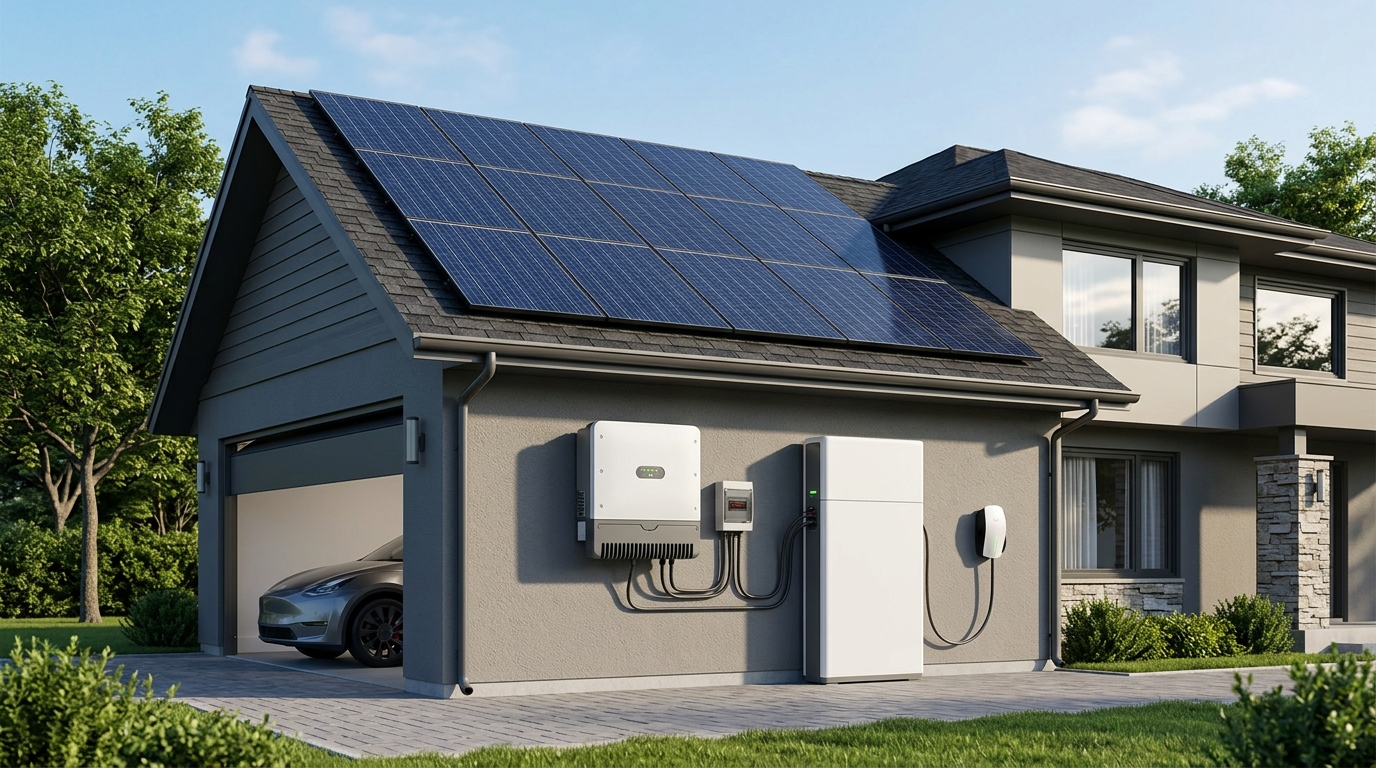
Choosing the best hybrid solar inverter in 2026 can help homeowners make better use of solar energy, store excess electricity in batteries, and maintain power during electricity outages. Unlike a conventional grid-tied inverter, a hybrid inverter can coordinate solar panels, battery storage, household electricity consumption, and grid power within a compatible system.
However, choosing the right inverter involves more than comparing brands or selecting the highest power rating. Battery compatibility, solar input capacity, conversion efficiency, backup power, monitoring features, warranty coverage, and installation costs all influence the performance of a solar energy system.
Some homeowners need an inverter for essential household appliances, while others want to operate air conditioners, refrigerators, water pumps, and other high-power equipment. Businesses and larger homes may also require three-phase systems with higher output capacity.
In this guide, we compare some of the best hybrid solar inverters in 2026, explain their features and limitations, discuss installation costs, and provide practical advice to help you select the right inverter for your home.
Quick Comparison: Best Hybrid Solar Inverters in 2026
The following models and product families are worth considering when comparing residential and small commercial hybrid solar systems. Their availability, supported battery types, power ratings, and backup features depend on the exact model and regional configuration.
| Hybrid Solar Inverter | Main Strength | Best For |
|---|---|---|
| Sungrow SH Series | Residential solar and battery integration | Homes seeking an integrated energy system |
| GoodWe ET Series | Three-phase hybrid configurations | Larger homes and suitable commercial applications |
| Fronius GEN24 Plus | Premium solar energy management | Homeowners prioritizing system integration |
| Solis S6 Hybrid Series | Different residential hybrid configurations | Homeowners comparing flexible system options |
| Sigenergy SigenStor | Integrated smart energy management | Smart home energy installations |
| Deye SUN Hybrid Series | Multiple system configurations | Homes and installations requiring suitable hybrid options |
Important: These are options to investigate, not a verified ranking of every available inverter. Always check the exact model’s technical specifications, regional availability, compatibility, and warranty before purchasing.
What Is a Hybrid Solar Inverter?
A hybrid solar inverter is an electrical device that coordinates electricity from solar panels, batteries, and other available power sources. It converts the direct current (DC) generated by solar panels or supplied by a compatible battery into alternating current (AC) used by household appliances.
Depending on its design, a hybrid inverter can also manage battery charging, supply electricity from the grid, and provide backup power during outages.
How Does a Hybrid Solar Inverter Work?
A typical hybrid solar system works through several stages:
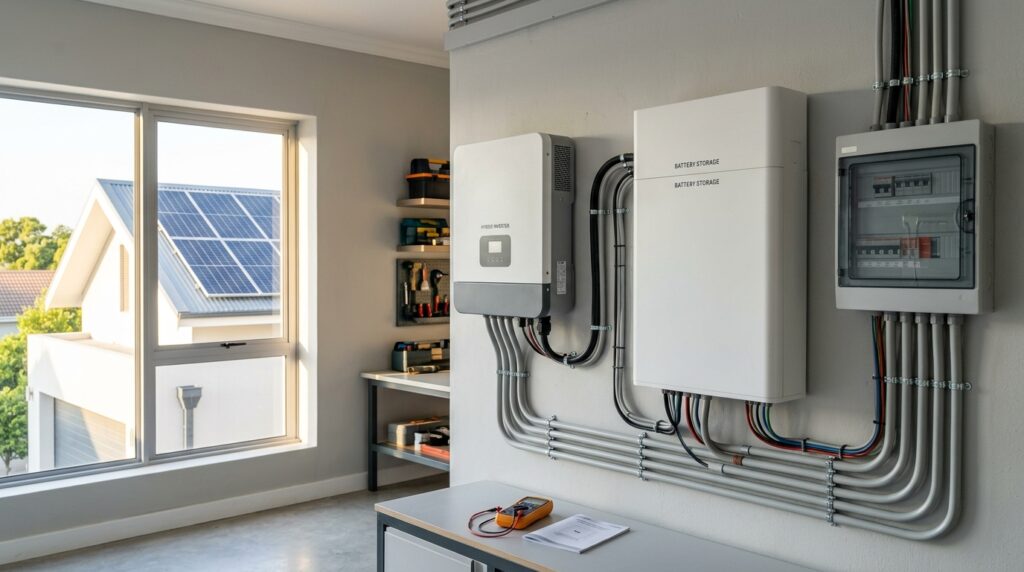
- Solar electricity generation: Solar panels convert sunlight into DC electricity.
- Power conversion: The inverter converts solar electricity into AC power for household use.
- Battery charging: Excess solar energy can charge a compatible battery.
- Household consumption: Solar energy supplies appliances whenever available and configured to do so.
- Grid interaction: The system can draw electricity from the grid when solar generation and battery power are insufficient.
- Backup operation: If the system supports backup functionality, the inverter can supply designated loads during a grid outage.
The exact sequence depends on the inverter’s operating modes, system settings, battery state of charge, and local electrical requirements.
Why Are Hybrid Solar Inverters Popular in 2026?
Hybrid inverters offer several potential advantages over simpler solar inverter configurations.
- Battery integration: They can coordinate solar electricity with compatible battery storage.
- Backup power: Supported models can power selected appliances during grid outages.
- Better energy management: They can prioritize solar electricity, battery charging, or grid electricity according to configured settings.
- Greater flexibility: Some systems support future battery expansion or additional equipment.
- Energy monitoring: Compatible apps can show solar generation, battery status, and household electricity consumption.
- Potential savings: Better use of stored solar energy may reduce electricity purchases, depending on local tariffs.
Not every hybrid inverter supports every feature. Some require additional backup equipment, compatible batteries, or specific electrical configurations.
Best Hybrid Solar Inverters in 2026
1. Sungrow SH Series — Best for Residential Solar and Battery Integration
Sungrow offers several residential hybrid inverter families designed to combine solar generation, battery storage, and household energy management.
Different SH models support different power ratings, battery configurations, and electrical systems. Therefore, homeowners should compare the exact model rather than assuming that every inverter in the series has identical features.
Key Features
- Hybrid solar and battery operation on supported models.
- Multiple residential power ratings.
- Energy monitoring through compatible monitoring equipment.
- Support for compatible battery systems.
- Backup functionality on suitable configurations.
- Solar input and MPPT arrangements that vary by model.
Advantages
- Offers several options for residential installations.
- Supports integrated solar and battery management.
- May suit homeowners planning a new solar and storage system.
- Provides monitoring capabilities through compatible equipment.
Disadvantages
- Battery compatibility differs between models.
- Backup performance depends on the inverter and supporting equipment.
- Installation and service availability vary by country.
- Regional product versions may have different specifications.
Best for: Homeowners who want to compare residential hybrid inverters with integrated solar and battery management.
2. GoodWe ET Series — Best for Three-Phase Hybrid Systems
GoodWe’s ET Series includes three-phase hybrid inverters designed for suitable residential and commercial applications.
Three-phase systems can be useful for properties with three-phase electrical supplies or higher power requirements. The appropriate configuration depends on the home’s electrical installation and the appliances that must operate simultaneously.
Key Features
- Three-phase hybrid inverter options.
- Solar generation and battery management.
- Energy monitoring through supported equipment.
- Compatibility with selected battery systems.
- Backup features depending on the exact model and installation.
- Different power ratings across the product family.
Advantages
- Suitable options for properties with three-phase electrical systems.
- Supports coordinated solar and battery operation.
- May be appropriate for larger household energy requirements.
- Offers configurations for different system designs.
Disadvantages
- Not every model is appropriate for a single-phase home.
- Battery compatibility must be confirmed.
- Some backup features require additional equipment.
- Larger installations may involve higher equipment and installation costs.
Best for: Homeowners and property owners who need a suitable three-phase hybrid inverter.
3. Fronius GEN24 Plus — Best for Premium Solar Energy Management
The Fronius GEN24 Plus family is designed for solar generation and compatible battery integration, with features depending on the selected model.
It is worth considering for homeowners who prioritize energy management, monitoring, and integration with compatible solar equipment.
Key Features
- Residential solar inverter configurations.
- Battery integration on supported Plus models.
- Energy monitoring through compatible systems.
- Backup options that depend on model and installation.
- Different single-phase and three-phase configurations within the product family.
Advantages
- Offers integrated energy management features.
- Suitable for homeowners who want to coordinate solar production and storage.
- Provides several system options for different residential requirements.
- Can support backup applications when correctly configured.
Disadvantages
- Battery compatibility depends on the exact model and system configuration.
- Some backup functions require additional components.
- Installation costs may be higher for more complex systems.
- Regional availability and installer support should be checked.
Best for: Homeowners seeking a premium solar energy management system with compatible battery options.
4. Solis S6 Hybrid Series — Best for Flexible Residential Configurations
Solis offers S6 hybrid inverter models for different residential and energy storage applications.
The available models may differ in power output, phase configuration, battery voltage, solar input capacity, and backup features. Selecting the correct version is essential.
Key Features
- Hybrid solar and battery operation on supported models.
- Multiple power ratings and configurations.
- Solar input management through MPPT technology.
- Monitoring through compatible equipment.
- Backup functionality on suitable installations.
- Support for specified battery types and communication protocols.
Advantages
- Provides several models to compare.
- Can suit different residential system requirements.
- Supports battery storage in compatible configurations.
- Offers options for homeowners planning a new solar installation.
Disadvantages
- Specifications vary significantly across model families.
- Battery compatibility must be checked before purchase.
- Backup performance depends on system design.
- Local warranty and service availability can differ.
Best for: Homeowners comparing different hybrid inverter configurations for residential solar and battery storage.
5. Sigenergy SigenStor — Best for Integrated Smart Energy Systems
Sigenergy’s SigenStor product family combines compatible energy management components with residential energy storage options.
Depending on the selected configuration, the system can coordinate solar generation, battery storage, and other supported energy functions. This makes it worth considering for homeowners planning a more integrated energy system.
Key Features
- Integrated energy management capabilities.
- Compatibility with supported battery and solar components.
- Monitoring and control features.
- Configurations for different household energy requirements.
- Smart energy functions depending on the installed components.
Advantages
- Designed around coordinated energy management.
- Offers an integrated approach to solar and battery storage.
- May suit homeowners planning a smart energy installation.
- Provides options for different system configurations.
Disadvantages
- Features depend on the selected system components.
- The initial cost may be higher than a simpler installation.
- Compatibility and local availability need to be checked.
- Installation requires appropriate system design and professional commissioning.
Best for: Homeowners interested in an integrated solar, battery, and smart energy management system.
6. Deye SUN Hybrid Series — Best for Multiple System Configurations
Deye’s SUN hybrid inverter family includes models designed for different residential and larger energy storage applications.
Depending on the exact model, these systems can support different battery arrangements, electrical phases, and backup configurations. Buyers should pay particular attention to battery voltage, solar input limits, and the supported electrical system.
Key Features
- Multiple inverter power ratings.
- Hybrid solar and battery operation on supported models.
- Single-phase and three-phase options across the wider product family.
- Energy monitoring and management features.
- Backup capabilities depending on the selected configuration.
- Support for specified battery types and communication protocols.
Advantages
- Offers a broad range of system configurations.
- Can suit different residential energy requirements.
- Provides options for battery-supported solar installations.
- May be suitable for selected larger energy storage applications.
Disadvantages
- Features vary substantially between models.
- Correct model selection is essential.
- Battery communication and voltage compatibility must be confirmed.
- Local service support and warranty arrangements need careful evaluation.
Best for: Homeowners or installers comparing different hybrid inverter configurations for a particular energy system.
Hybrid Solar Inverter Comparison Table
Use this table as an initial shortlist. It compares the general strengths of each product family rather than presenting an independently tested performance ranking.
| Inverter Family | System Focus | Important Consideration |
|---|---|---|
| Sungrow SH | Residential hybrid systems | Check battery and backup compatibility |
| GoodWe ET | Three-phase hybrid systems | Confirm the property’s electrical phase |
| Fronius GEN24 Plus | Integrated solar energy management | Check exact model and supported batteries |
| Solis S6 Hybrid | Multiple hybrid configurations | Compare solar input and battery specifications |
| Sigenergy SigenStor | Integrated smart energy systems | Confirm required system components |
| Deye SUN Hybrid | Multiple residential and larger configurations | Check voltage, phase, and communication support |
Actual efficiency, output power, operating temperature, warranty, and solar input limits must be compared using the technical specifications for each exact model.
Important Features to Consider When Buying a Hybrid Solar Inverter
Choosing a hybrid inverter based only on its advertised kilowatt rating can result in poor system performance. The following specifications deserve careful attention.
1. Rated Power Output
Rated output power indicates how much AC power an inverter can supply under its specified operating conditions.
For example, a 5 kW inverter may be suitable for a home with moderate simultaneous electricity demand, but it may not be sufficient for several high-power appliances operating together.
How Much Inverter Capacity Do You Need?
Your required capacity depends on the appliances you want to run simultaneously.
| Household Requirements | What to Evaluate |
|---|---|
| Lights, fans, and electronics | Combined continuous load |
| Refrigerator and household essentials | Running and starting power |
| One or more air conditioners | Compressor demand and simultaneous loads |
| Water pumps and other motors | Starting surge requirements |
| Large household with multiple heavy appliances | Higher output and possible three-phase requirements |
These are planning categories, not fixed inverter-size recommendations. Actual requirements depend on appliance ratings, starting currents, and operating patterns.
2. Solar Panel Input Capacity
The maximum photovoltaic (PV) input rating indicates how much solar power an inverter can accept under specified conditions.
A hybrid inverter’s AC output rating and its maximum recommended solar array size are not necessarily identical.
For example, an inverter may support a solar array larger than its nominal AC output rating. This can help capture more energy during periods when solar panels operate below their peak rated output.
Before buying, check:
- Maximum recommended PV array power.
- Maximum DC input voltage.
- MPPT operating voltage range.
- Maximum input current per MPPT.
- Number of independent MPPT trackers.
- Supported solar panel configurations.
Incorrect panel-string design can cause reduced performance or exceed the inverter’s electrical limits. A qualified installer should verify the complete array design.
3. MPPT Technology
Maximum Power Point Tracking, or MPPT, helps a solar inverter operate solar panels at a voltage and current combination that extracts available power efficiently.
Why Does the Number of MPPT Trackers Matter?
Multiple independent MPPT trackers can help when solar panels face different directions or experience different shading conditions.
For example, panels on an east-facing roof may receive sunlight at different times from panels on a west-facing roof. Separate trackers can help optimize the output of differently oriented solar strings when the system design supports that arrangement.
However, more MPPT trackers do not automatically guarantee higher efficiency. The correct configuration depends on the roof layout, panel strings, shading, and electrical specifications.
4. Battery Compatibility
Battery compatibility is one of the most important factors when purchasing a hybrid inverter.
Some inverters support specific high-voltage battery systems, while others use low-voltage battery configurations. The inverter must support the battery’s voltage range and charging requirements.
What Should You Check?
- Supported battery chemistry.
- Battery voltage range.
- Maximum charging and discharging current.
- Battery management system communication.
- Supported battery models.
- Maximum supported storage capacity.
- Manufacturer warranty requirements.
A lithium battery may require communication between its battery management system (BMS) and the inverter. Without compatible communication, some features may not operate correctly.
Never assume that two products are compatible simply because they use the same battery chemistry.
5. Conversion Efficiency
Conversion efficiency measures how effectively an inverter converts DC electricity into usable AC electricity under specified test conditions.
A higher efficiency rating generally means less energy is lost during conversion. However, efficiency changes with operating power, temperature, and other conditions.
When comparing inverters, review:
- Maximum efficiency.
- European or weighted efficiency, where provided.
- Efficiency at realistic operating loads.
- Standby and nighttime consumption.
- Battery charging and discharging performance, where specified.
A maximum efficiency figure alone does not describe how the inverter will perform throughout an entire day.
6. Backup Power and Changeover Time
Backup capability determines whether the inverter can supply electricity during a grid outage and how quickly the system transitions to backup operation.
Some models provide dedicated backup outputs, while others require additional equipment to isolate the home safely from the grid.
Important Backup Features
- Supported backup output power.
- Transfer or changeover time.
- Starting power for motors and compressors.
- Support for essential-load or whole-home backup.
- Battery requirements during outages.
- Compatibility with generators, where supported.
Sensitive electronic devices may require specific power quality or a separate uninterruptible power supply. Check the inverter’s specifications before relying on it for critical equipment.
7. Single-Phase vs. Three-Phase Inverters
The correct phase configuration depends on the electrical supply at your property.
Single-Phase Hybrid Inverters
Single-phase models are commonly used in homes with single-phase electrical supplies. They can be suitable for many residential solar installations when their power rating matches the household’s requirements.
Three-Phase Hybrid Inverters
Three-phase models may be appropriate for larger homes, properties with three-phase supplies, and certain commercial applications.
They can support larger electrical systems, but they must be matched to the property’s wiring and local utility requirements.
Choosing a three-phase inverter for a single-phase installation without verifying compatibility can create unnecessary expense and installation problems.
8. Monitoring and Smart Energy Management
Modern hybrid inverters often include apps or monitoring platforms that display system performance.
Useful monitoring features include:
- Real-time solar generation.
- Household electricity consumption.
- Battery state of charge.
- Grid electricity import and export.
- Historical energy production.
- System alerts and fault information.
- Configurable operating modes.
Monitoring can help homeowners understand how their system performs and identify unusual changes in energy production.
Some monitoring functions require internet connectivity, additional hardware, or a paid service. Confirm the available features before purchase.
9. Protection and Environmental Ratings
Solar inverters operate in electrical and environmental conditions that can affect their reliability.
Check the following specifications:
- Operating temperature range.
- Enclosure protection rating.
- Surge protection.
- Overcurrent and short-circuit protection.
- Ground-fault and insulation monitoring, where applicable.
- Anti-islanding protection.
- Noise levels.
- Suitable mounting and ventilation requirements.
Outdoor installation may require a more suitable enclosure and careful consideration of direct sunlight, rain, dust, and heat.
10. Warranty and After-Sales Support
A long warranty is useful only if its terms are clear and suitable service support is available.
Before purchasing, check:
- Warranty duration.
- Conditions for warranty validity.
- Local service and repair arrangements.
- Availability of replacement parts.
- Software and firmware support.
- Requirements for authorized installation.
- Battery and inverter warranty compatibility.
Reliable local support can be especially important because an inverter problem may interrupt solar production or battery backup.
How Much Does a Hybrid Solar Inverter Cost in 2026?
Hybrid inverter prices vary widely depending on power rating, product quality, battery compatibility, phase configuration, backup features, and country.
A small residential inverter and a premium three-phase hybrid system cannot be compared on purchase price alone.
Factors That Affect Hybrid Inverter Prices
Inverter Capacity
Higher-capacity inverters generally cost more because they handle larger electrical loads and may require more substantial internal components.
Battery Compatibility
Some hybrid systems are designed for specific battery ecosystems or require additional equipment for battery integration.
Backup Functionality
Whole-home backup, essential-load circuits, and fast changeover capabilities can affect the total system cost.
Installation Complexity
Electrical panel modifications, wiring, protection devices, mounting requirements, and commissioning contribute to the installed price.
Warranty and Local Support
Products with stronger local support or different warranty arrangements may have different purchase prices.
What Should an Installation Quote Include?
| Component | What to Confirm |
|---|---|
| Hybrid inverter | Exact model and rated output |
| Solar panels | Total array capacity and configuration |
| Battery | Capacity, voltage, and compatibility |
| Protection equipment | Required electrical safety devices |
| Installation | Labor, wiring, and mounting |
| Backup equipment | Required changeover and backup components |
| Monitoring | Included hardware and features |
| Warranty | Coverage for equipment and installation |
Request an itemized quotation so that you can compare complete systems rather than only inverter prices.
Hybrid vs. On-Grid vs. Off-Grid Solar Inverters
Understanding inverter types helps you choose a system that fits your electricity requirements.
Hybrid Solar Inverter
A hybrid inverter can coordinate solar panels, compatible batteries, and grid electricity.
Best for: Homeowners who want solar generation, battery storage, and potentially backup power within one coordinated system.
On-Grid Solar Inverter
A conventional grid-tied inverter primarily converts solar electricity for use in a home or for export to the grid under applicable arrangements.
Many standard grid-tied systems shut down during a grid outage for safety reasons unless additional equipment and a suitable design provide backup functionality.
Best for: Homes that want to use solar electricity and have a reliable grid connection without necessarily adding battery storage.
Off-Grid Solar Inverter
An off-grid inverter is designed for systems that operate independently of the utility grid, typically using batteries and solar generation, with a generator or another source where needed.
Best for: Remote properties or installations where a utility grid connection is unavailable or unsuitable.
Comparison Table
| Feature | Hybrid Inverter | On-Grid Inverter | Off-Grid Inverter |
|---|---|---|---|
| Solar panel support | Yes | Yes | Yes |
| Battery support | Supported configurations | Not usually included in a basic system | Commonly required |
| Grid connection | Supported | Required for normal grid-tied operation | Optional or unavailable |
| Backup power | On suitable models and installations | Not normally available in a basic installation | Supported by a properly designed system |
| Energy storage management | Yes, when configured | Usually limited in a basic system | Yes |
| Typical use | Solar, battery, and grid integration | Grid-connected solar | Independent power systems |
Actual functionality depends on the equipment and installation design.
How to Choose the Best Hybrid Solar Inverter for Your Home
Follow these steps before making a purchase.
Step 1: Calculate Your Household Load
List the appliances you want to run simultaneously.
Record their power ratings, normal operating consumption, and starting requirements where relevant.
Include high-demand appliances such as:
- Air conditioners.
- Refrigerators and freezers.
- Water pumps.
- Washing machines.
- Electric cooking appliances.
- Computers and other sensitive electronics.
Do not simply add every appliance’s maximum rating without considering how they operate. A qualified installer can calculate the appropriate design load and account for starting surges.
Step 2: Determine Your Solar Panel Capacity
Estimate how much solar electricity your roof can generate.
Consider roof direction, shading, available installation space, local sunlight, and seasonal changes.
Then check whether the inverter can support the planned solar array within its voltage, current, and power limits.
Step 3: Decide Whether You Need Battery Storage
If you mainly want to use solar electricity during the day, a conventional grid-tied system may be sufficient.
If you want to store excess electricity for evening use or maintain power during outages, a suitable hybrid inverter and compatible battery system may be more appropriate.
Step 4: Select the Correct Power Rating
Choose an inverter that can support your expected simultaneous loads, taking into account continuous output and starting requirements.
Avoid selecting an inverter solely because its rating appears close to your monthly electricity consumption. Energy consumption and instantaneous power demand are different measurements.
Step 5: Check Battery Expansion Options
If you plan to increase storage capacity later, confirm that the inverter supports expansion and determine its maximum permitted battery configuration.
Also check whether additional batteries must be the same model, chemistry, voltage, or generation.
Step 6: Compare Warranty and Service
Choose a product with suitable warranty coverage and reliable service support in your location.
A slightly cheaper inverter may not offer good long-term value if repairs are difficult or replacement components are unavailable.
Step 7: Compare Total System Cost
Compare the full cost of the inverter, panels, batteries, protection equipment, installation, and any backup components.
Evaluate the complete system’s expected performance rather than focusing on one specification.
Common Mistakes to Avoid When Buying a Hybrid Solar Inverter
Choosing an Inverter Based Only on Kilowatts
Two inverters with the same rated output can have different solar input limits, MPPT arrangements, battery requirements, and backup capabilities.
Always compare the technical specifications.
Ignoring Battery Compatibility
A battery that operates with one inverter may not be supported by another. Confirm the exact model and communication requirements before purchasing.
Overlooking Solar Input Current
Modern solar panels can have substantial output current. The inverter’s input current limits must match the selected panels and string configuration.
Assuming Every Hybrid Inverter Provides Whole-Home Backup
Some models support only specific backup outputs or require additional switching and electrical equipment. Confirm the backup configuration before installation.
Ignoring Local Climate
Heat, dust, humidity, and direct sunlight can affect equipment operating conditions. Choose an appropriate installation location and enclosure.
Buying Without Checking Local Service
Warranty coverage, repair availability, and replacement parts can vary by region. These factors should be part of your purchasing decision.
Frequently Asked Questions (FAQs)
1. Which Is the Best Hybrid Solar Inverter in 2026?
There is no single best hybrid inverter for every household. Sungrow SH, GoodWe ET, Fronius GEN24 Plus, Solis S6 Hybrid, Sigenergy SigenStor, and Deye SUN Hybrid are product families worth comparing. The right choice depends on your load, battery requirements, system configuration, budget, and local service availability.
2. What Size Hybrid Solar Inverter Does a Home Need?
The correct size depends on which appliances run simultaneously, their continuous power requirements, and any starting surges. A qualified installer should calculate the expected load and match the inverter’s rated and peak output to the system’s requirements.
3. Can a Hybrid Solar Inverter Work Without a Battery?
Some hybrid inverters can operate without a battery under supported configurations, while others have specific battery requirements or restricted operating modes. Check the exact model’s specifications before purchasing if you intend to add a battery later.
4. Can a Hybrid Inverter Run During a Power Outage?
Yes, if the inverter and complete installation support backup operation. The system may need a compatible battery, backup switching equipment, and a suitable electrical configuration. Not every hybrid inverter automatically provides whole-home backup.
5. Is a Hybrid Inverter Better Than an On-Grid Inverter?
A hybrid inverter offers battery integration and can support backup operation when configured appropriately. A conventional on-grid inverter may be more economical when battery storage and backup power are not required. The best choice depends on your goals and budget.
6. How Many Solar Panels Can a Hybrid Inverter Support?
The number depends on the inverter’s recommended PV array power, maximum DC voltage, input current, MPPT voltage range, and panel specifications. Calculate the panel strings using the exact technical limits rather than estimating by inverter kilowatts alone.
7. Can I Add More Batteries to My Hybrid Inverter Later?
Some systems support additional compatible batteries, but expansion limits vary by model. Confirm the maximum supported capacity, battery configuration, communication requirements, and warranty conditions before planning an upgrade.
8. How Long Does a Hybrid Solar Inverter Last?
The service life depends on product quality, operating temperature, installation, electrical conditions, and maintenance. Review the manufacturer’s warranty and expected service-life information for the exact model. Keep the inverter properly installed and ensure adequate ventilation according to its specifications.
9. Do Hybrid Solar Inverters Reduce Electricity Bills?
They can help reduce electricity purchases by prioritizing solar generation and using stored energy when appropriate. Actual savings depend on solar production, household consumption, electricity tariffs, battery costs, and system efficiency.
10. Are Hybrid Solar Inverters Suitable for Large Homes?
Yes, selected models can support larger residential installations. However, high household loads may require a higher-capacity inverter, a three-phase system, multiple compatible units, or a carefully designed electrical configuration.
11. What Is the Difference Between a Hybrid Inverter and a Solar Battery?
A hybrid inverter manages electricity conversion and power flow between supported system components. A solar battery stores energy for later use. They perform different functions and must be compatible when installed together.
12. What Should I Check Before Buying a Hybrid Solar Inverter?
Compare rated output, solar input capacity, MPPT voltage and current limits, battery compatibility, conversion efficiency, backup features, protection ratings, monitoring, warranty, and local service support.
Conclusion
The best hybrid solar inverter in 2026 is the one that matches your household’s electricity demand, solar panel configuration, battery requirements, and backup expectations. Sungrow SH, GoodWe ET, Fronius GEN24 Plus, Solis S6 Hybrid, Sigenergy SigenStor, and Deye SUN Hybrid are useful starting points for comparing different residential energy solutions.
Before purchasing, calculate your expected loads, check the inverter’s solar input limits, confirm battery compatibility, and review the backup equipment required for your installation. Compare complete system prices, warranty terms, and local service availability rather than relying on brand reputation or rated power alone.
A properly selected hybrid solar inverter can improve the way your home uses solar electricity, coordinate battery storage, and provide backup power when the complete system supports it. Careful planning and professional installation are essential for obtaining reliable performance and long-term value.