Solar Battery vs Generator: Which Is Better in 2026?
When the electricity goes out, having a reliable backup power system can make a major difference to your home. You may need to keep the refrigerator running, maintain internet access, charge phones, power essential medical equipment, or operate heating and cooling systems. Two popular solutions are solar battery backup systems and fuel-powered generators.
But solar battery vs generator: which is better in 2026? The answer depends on your budget, energy requirements, outage duration, access to sunlight, and preference for convenience or fuel independence.
A solar battery stores electricity for later use and can recharge from solar panels or the grid, depending on the system. A traditional generator produces electricity by burning fuel such as gasoline, propane, diesel, or natural gas. Both can provide backup power, but their costs, operating requirements, environmental impact, and long-term benefits are different.
This guide compares solar batteries and generators in detail to help you choose the right home backup solution.
Solar Battery vs Generator: Quick Comparison
| Feature | Solar Battery Backup | Fuel-Powered Generator |
|---|---|---|
| Initial cost | Usually higher for a whole-home system | Usually lower for basic portable backup |
| Operating cost | Low when charged from solar; grid charging may cost money | Requires ongoing fuel |
| Noise | Generally very quiet | Usually produces noticeable engine noise |
| Exhaust emissions during operation | None from the battery itself | Produces exhaust, including carbon monoxide |
| Runtime | Limited by stored energy and recharging | Can continue while fuel is available |
| Recharging or refueling | Solar panels or grid, depending on setup | Fuel supply |
| Maintenance | Generally low, with system inspections still important | Engine servicing and fuel-system maintenance |
| Automatic backup | Possible with compatible equipment | Possible with a properly installed standby system |
| Solar energy use | Yes, when paired with suitable solar equipment | Not directly |
| Best for | Quiet backup, solar energy storage, and everyday energy management | Extended outages and high power demand |
Quick verdict: A solar battery is often the better choice for quiet, low-maintenance backup and making use of solar energy. A fuel-powered generator can be more practical for prolonged outages when fuel is available and electricity demand is high. For some homes, combining both provides the most flexible solution.
What Is a Solar Battery Backup System?
A solar battery backup system stores electricity in rechargeable batteries so it can be used when the grid is unavailable or when you choose to draw on stored energy.
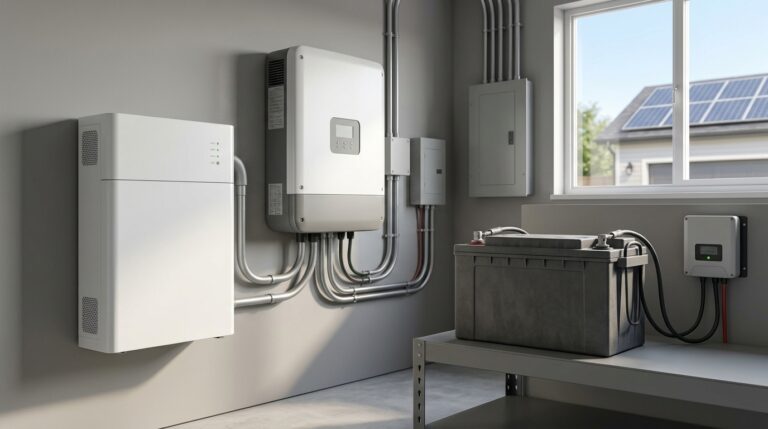
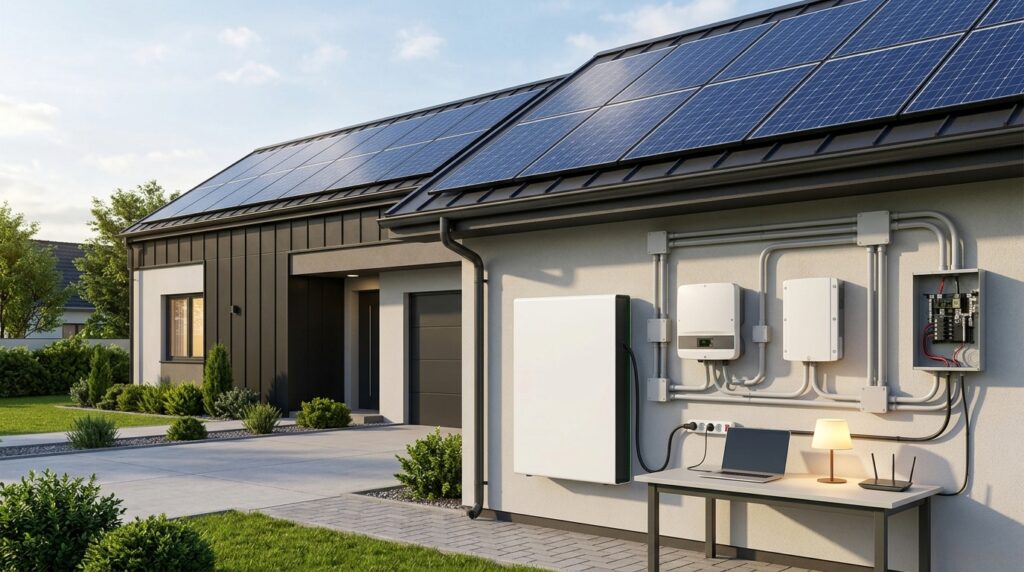
A typical residential system may include solar panels, a battery, an inverter, a battery management system, and equipment that safely connects backup power to designated household circuits.
How Does a Solar Battery Work?
During sunny conditions, solar panels convert sunlight into direct-current electricity. A compatible inverter and battery system manage the energy, supplying household loads and charging the battery when surplus energy is available.
When the grid goes down, a system designed for backup can disconnect from the grid and supply electricity to its supported loads. The exact operation depends on the system’s design and installation.
A solar battery does not automatically provide backup simply because a house has solar panels. Many standard grid-connected solar systems shut down during a power outage unless they include compatible backup equipment.
Main Components of a Solar Battery System
- Solar panels: Generate electricity from sunlight.
- Battery: Stores electricity for later use.
- Inverter: Converts electricity into the form needed by household appliances.
- Backup gateway or transfer equipment: Manages the connection to the home’s backed-up circuits.
- Energy management system: Monitors electricity production, consumption, and battery charging.
Benefits of Solar Battery Backup
A solar battery can provide quiet power, reduce dependence on fuel, and store solar electricity for evening use or outages. Depending on your system and electricity tariff, it may also help reduce electricity bills by shifting when you consume grid power.
The main limitation is stored energy. Once the battery is depleted, the system needs a suitable charging source. Solar charging can be slower or less reliable during prolonged cloudy weather, winter conditions, or periods of heavy household consumption.
What Is a Home Backup Generator?
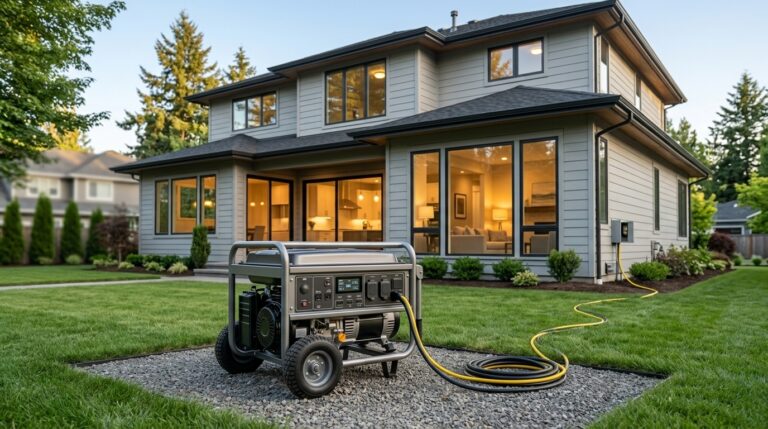
A home backup generator is a machine that produces electricity using an engine powered by fuel. Portable generators typically provide electricity through built-in outlets, while permanently installed standby generators can connect to selected household circuits through approved transfer equipment.
How Does a Generator Work?
A fuel-powered generator burns gasoline, propane, diesel, or natural gas to operate an engine. The engine drives an alternator, which produces electricity.
A portable generator usually needs to be positioned outdoors and started according to its instructions. A standby generator can start automatically when a power failure is detected, provided it has compatible automatic transfer equipment and a suitable installation.
Common Types of Backup Generators
Portable generators: Generally lower in upfront cost and suitable for selected essential appliances.
Inverter generators: Often quieter than conventional generators at comparable light loads and useful for compatible electronics.
Dual-fuel generators: Can operate on two supported fuel types, often gasoline and propane.
Standby generators: Permanently installed systems designed to provide automatic backup for selected circuits or larger household loads.
Benefits of a Backup Generator
A generator can continue producing electricity as long as it has an adequate fuel supply and is operated within its limits. This makes it attractive for long outages, high energy demand, and situations in which reliable solar recharging is uncertain.
However, generators require fuel, maintenance, and safe outdoor operation. Their noise and exhaust also make installation location an important safety consideration.
Solar Battery vs Generator: Which Costs Less?
The initial price is one of the biggest differences between these technologies. A basic portable generator may cost considerably less than a residential battery backup system with sufficient capacity for several hours of household use.
However, the purchase price is only part of the total cost. Fuel, maintenance, installation, battery replacement, electricity tariffs, and the amount of energy used during outages can change the long-term comparison.
Initial Purchase and Installation Costs
| Cost Factor | Solar Battery System | Generator System |
|---|---|---|
| Basic equipment | Often expensive for substantial home backup | Portable units can be relatively affordable |
| Installation | Commonly requires qualified electrical installation | Portable outlet use may need minimal setup; home wiring requires approved transfer equipment |
| Solar panels | Additional cost if not already installed | Not normally required |
| Fuel storage or connection | Not needed for the battery itself | Required, depending on fuel type |
| Transfer equipment | May be needed for household backup | Needed for safe connection to household circuits |
| Maintenance | Usually less routine mechanical maintenance | Regular engine and fuel-system maintenance |
| Long-term energy cost | Can be low with solar charging | Depends on fuel consumption and fuel prices |
A large home battery system can cost several times more than a portable generator, especially when solar panels and installation are included. A whole-home standby generator can also require a significant installation budget, so the comparison should use equivalent backup capabilities.
Ongoing Costs of a Solar Battery
A solar battery charged by surplus solar electricity can store energy without requiring purchased fuel. If you charge it from the grid, however, the electricity used to charge it is not free.
Other potential costs include system inspections, inverter servicing, monitoring equipment, and eventual battery replacement. Battery life depends on chemistry, temperature, cycling, and operating conditions.
Ongoing Costs of a Generator
Generators consume fuel whenever they run. Fuel use generally increases as the electrical load rises, and long outages can require substantial fuel supplies.
Generators also need maintenance, which may include oil changes, air-filter service, spark-plug replacement, fuel-system care, and periodic testing. Standby systems may require professional servicing.
Which Has the Lower Lifetime Cost?
There is no universal winner. A solar battery paired with an existing solar array may offer attractive operating costs for frequent short outages and daily energy management. A portable generator may be less expensive for a household that experiences only occasional outages.
For a fair comparison, estimate the expected lifetime cost using your local equipment prices, electricity tariffs, fuel costs, maintenance requirements, and typical outage frequency.
Solar Battery vs Generator: Runtime and Reliability
Backup duration depends on how much power your home consumes and how the system can replenish its energy.
How Long Can a Solar Battery Run a House?
Battery runtime depends on usable capacity and the combined load of the appliances you want to operate.
A simple planning formula is:
Estimated runtime (hours) = usable battery capacity (kWh) ÷ average load (kW)
For example, a battery with 10kWh of usable energy supplying an average load of 1kW could theoretically provide about 10 hours of energy. Actual runtime will be lower if inverter losses, standby consumption, or other system limitations apply.
| Average Household Load | 5kWh Usable Battery | 10kWh Usable Battery | 15kWh Usable Battery |
|---|---|---|---|
| 250W | 20 hours | 40 hours | 60 hours |
| 500W | 10 hours | 20 hours | 30 hours |
| 1,000W | 5 hours | 10 hours | 15 hours |
| 2,000W | 2.5 hours | 5 hours | 7.5 hours |
These are simplified theoretical estimates. They assume a constant load and do not account for all conversion losses, system limits, or changes in appliance consumption.
How Long Can a Generator Run?
A fuel-powered generator can operate as long as it has sufficient fuel and is used according to its operating and maintenance requirements.
Portable generator runtime depends on tank capacity, fuel type, engine efficiency, and electrical load. A standby generator connected to a reliable natural gas supply may operate for an extended period, but it still needs maintenance and a dependable fuel source.
A generator does not eliminate the need for planning. You must know how to maintain the fuel supply safely and what operating intervals the manufacturer permits.
Which Is More Reliable During a Long Outage?
A generator may have the advantage during an extended outage if fuel is readily available. A solar battery can be recharged from sunlight, but solar output varies with weather, daylight hours, shade, and system size.
If you have adequate solar panels, low essential loads, and sufficient sunlight, a battery system may provide repeatable daily backup without buying fuel. During prolonged cloudy weather or high energy use, however, battery recharging may not keep pace with consumption.
For critical loads, consider the reliability of every part of the system, including fuel supply, solar availability, inverter capacity, and maintenance.
Solar Battery vs Generator: Noise and Environmental Impact
Noise Levels
Solar batteries operate quietly because they do not use an engine. The inverter or cooling fans may produce some sound, but the system is generally much quieter than a fuel-powered generator.
Generators produce engine and exhaust noise. Inverter generators may be quieter than conventional models, particularly at lower loads, but noise levels vary by model and operating conditions.
For closely spaced homes, noise restrictions and neighbor comfort may influence the decision.
Emissions and Air Quality
A battery does not produce exhaust emissions while delivering electricity. When charged by solar panels, it can provide backup energy without burning fuel at the home.
A fuel-powered generator produces exhaust that can contain carbon monoxide and other pollutants. Carbon monoxide is colorless and odorless and can cause severe illness or death.
Never operate a fuel-powered generator indoors, in a garage, in a basement, or in another enclosed or partially enclosed space. Keep portable generators outdoors and away from doors, windows, vents, and other openings. Follow the manufacturer’s placement instructions and local safety requirements, and use working carbon monoxide alarms in the home.
Which Is Better for the Environment?
A solar battery charged from renewable solar electricity generally has a lower operating-emissions profile than a fuel-powered generator. Its overall environmental impact also depends on manufacturing, battery materials, electricity sources used for charging, and end-of-life recycling.
A generator burns fuel whenever it runs, so its operating emissions rise with fuel consumption. For frequent backup use, the environmental difference may be more significant than for rare, short outages.
Solar Battery vs Generator: Maintenance Requirements
Maintenance affects reliability and long-term ownership costs.
Solar Battery Maintenance
Solar battery systems generally require less routine mechanical maintenance because they do not have an engine or fuel system. Nevertheless, they are not maintenance-free.
Owners should:
- Monitor system alerts and battery health.
- Keep equipment within its specified temperature range.
- Maintain appropriate ventilation and clearance.
- Inspect visible cables and equipment for damage.
- Keep solar panels reasonably clean when safe to do so.
- Arrange qualified inspections or service when required.
Generator Maintenance
Fuel-powered generators need more regular mechanical attention. Typical tasks include checking oil, inspecting filters, maintaining the fuel system, testing starting functions, and following scheduled service intervals.
Stored gasoline may deteriorate over time, so fuel management is important. A generator should be tested before it is needed, following the manufacturer’s instructions.
Which Requires Less Maintenance?
A solar battery usually requires less routine maintenance than an engine-driven generator. However, professional electrical inspections and battery-system servicing may still be needed. A generator’s maintenance burden depends on its type, operating hours, fuel, and installation.
Can a Solar Battery Power an Entire House?
Yes, some properly designed battery systems can supply a large portion of a home’s electrical demand or support whole-home backup. However, not every battery can run every appliance.
The key factors are:
- Usable capacity: How much stored energy is available.
- Continuous power output: How much electricity the inverter can deliver at once.
- Surge capability: Whether the system can handle appliance startup demands.
- Backup circuit design: Which parts of the home remain powered during an outage.
- Recharge capability: Whether solar panels or another supported source can replenish the battery.
A home with efficient lighting, refrigeration, networking equipment, and a few essential devices can often operate on much less energy than a home that relies on electric heating, electric cooking, or central air conditioning.
A qualified installer can determine whether a battery system can support your required circuits and whether additional batteries or load management are needed.
Can a Generator Power an Entire House?
A sufficiently sized standby generator can support many household circuits and, in some installations, most or all of a home’s electrical demand.
However, a generator must be sized according to the actual load. Air conditioners, pumps, electric ovens, water heaters, and other high-power appliances may need substantial starting or running power.
The installation may use load-management equipment to prevent selected appliances from operating simultaneously. This can allow a smaller generator to support more household functions without exceeding its limits.
For household wiring, use a suitable approved transfer system installed by a qualified electrician. Never feed generator power into an ordinary wall outlet.
Solar Battery vs Generator for Different Household Needs
The best solution depends on your lifestyle, power requirements, and the kind of outages you experience.
Best for Apartments and Small Homes
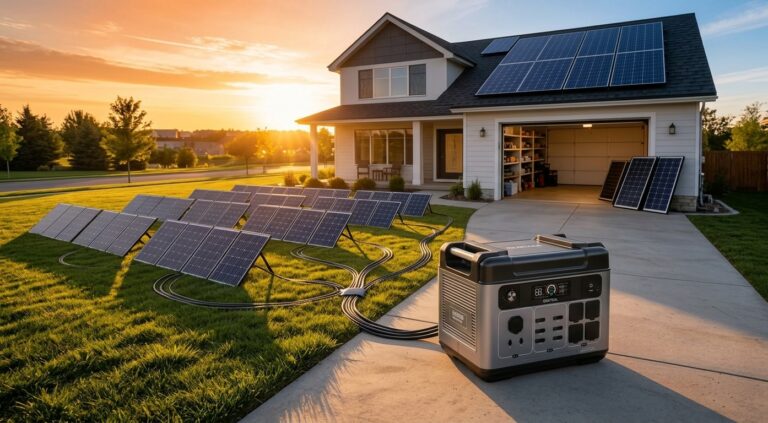
A portable battery power station may be practical if your needs are limited to phones, laptops, internet equipment, and LED lights. A permanently installed solar battery may not be necessary if your essential load is small.
Check building rules, storage limitations, and the electrical requirements of any equipment you plan to use.
Best for Homes With Solar Panels
A compatible battery can store excess solar generation and supply electricity when sunlight is unavailable or the grid fails. Before purchasing, verify that your existing inverter and solar system support backup operation.
Having solar panels alone does not guarantee that your home will remain powered during a grid outage.
Best for Homes With Frequent Long Outages
A standby generator may be more practical if outages regularly last for many hours or days and you need high output. A battery can still be useful for quiet backup and short interruptions.
A hybrid setup may offer the advantages of both technologies.
Best for Quiet, Low-Maintenance Backup
A solar battery is generally the better fit if quiet operation, low routine maintenance, and avoiding fuel storage are major priorities.
Best for High-Power Appliances
A generator or a suitably designed high-output battery system may be necessary for demanding appliances. Compare continuous output, startup requirements, and expected runtime rather than judging by the technology alone.
Solar Battery vs Generator: Is a Hybrid System Worth It?
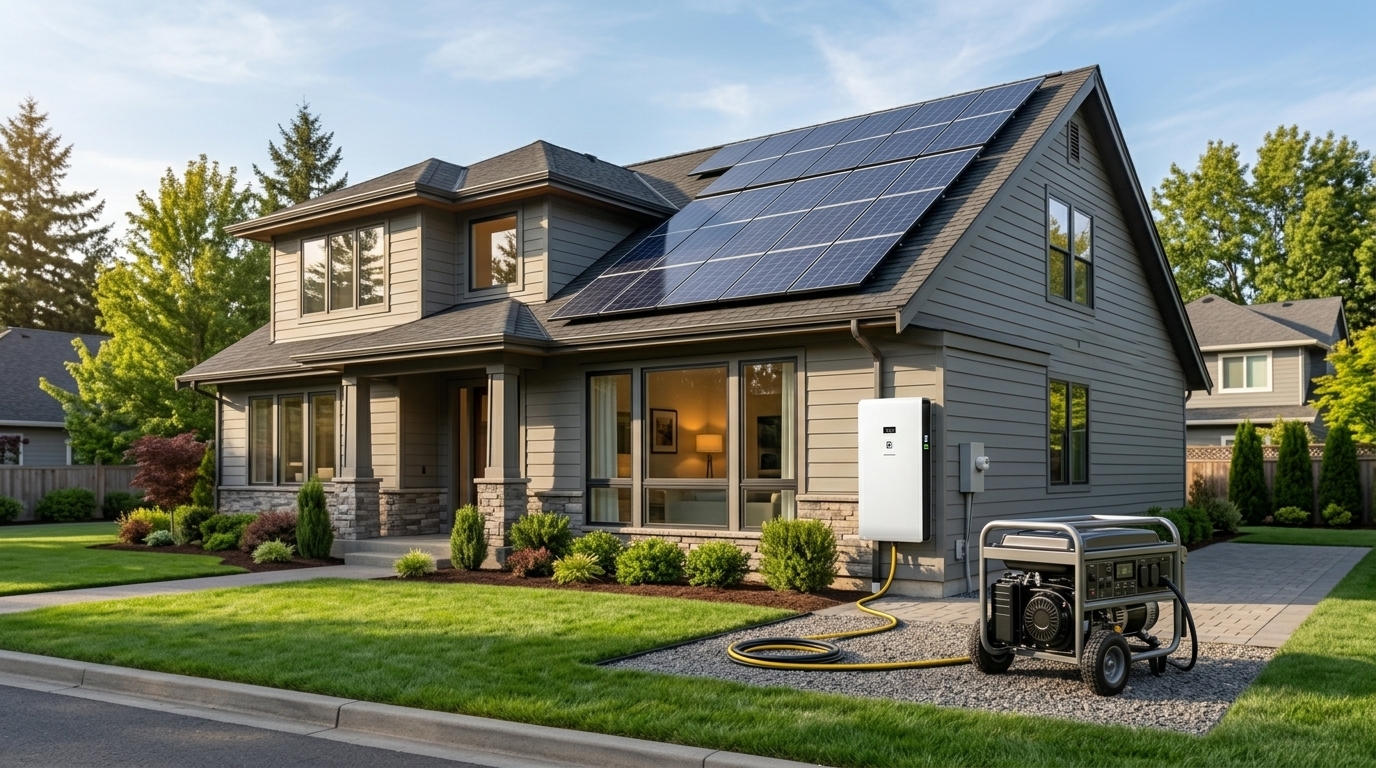
For some households, combining a solar battery with a generator can provide a useful balance.
The battery can handle short outages, power sensitive electronics quietly, and store solar energy. A generator can provide additional electricity during a prolonged outage, when solar production is insufficient or battery storage has been depleted.
How a Hybrid Backup System Works
A hybrid system may be designed to use solar panels to supply household loads and charge the battery during the day. The battery can then supply stored electricity during the evening or an outage.
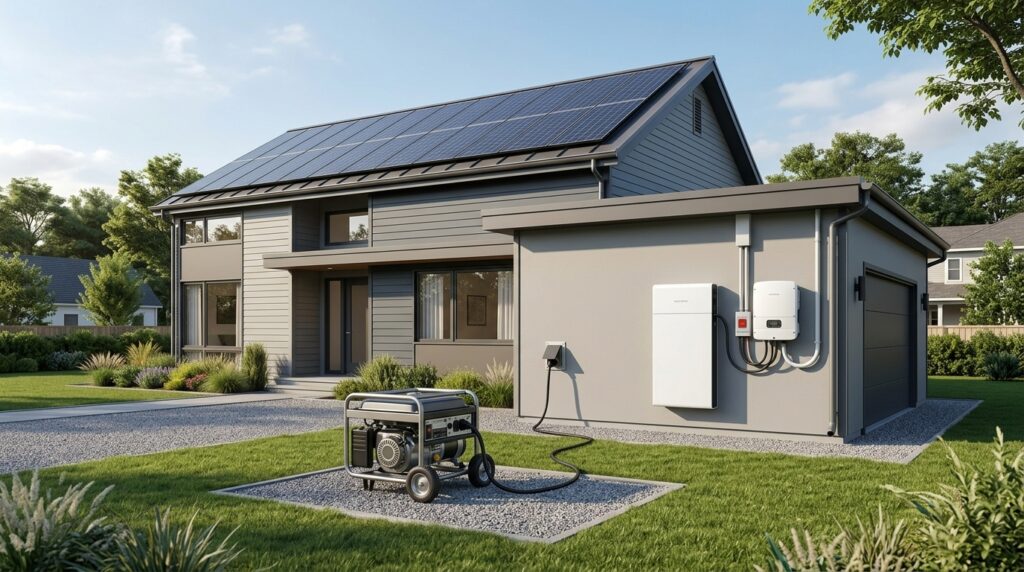
If the outage continues and the battery cannot be adequately recharged, a compatible generator can supply additional power through an approved system.
The exact arrangement depends on the battery inverter, generator compatibility, transfer equipment, and installation design. Not every battery can connect directly to every generator.
Benefits of Combining Both
- Quiet battery backup for short interruptions.
- Solar charging when sunlight is available.
- Additional backup capability during prolonged outages.
- Less generator operating time when battery and solar power can meet demand.
- More flexibility for homes with varying energy requirements.
Potential Disadvantages
A hybrid system costs more upfront and is more complex than either technology alone. It may require additional electrical equipment, professional design, maintenance planning, and careful coordination between components.
It is worth considering when outages are frequent, backup is important, and the household can justify the extra cost.
How to Choose the Right Backup System
Before buying a battery or generator, work through the following steps.
Step 1: List Your Essential Appliances
Identify the equipment that must remain operational during an outage. This might include refrigeration, lights, internet access, phone charging, fans, medical equipment, or a water pump.
Step 2: Calculate Power and Energy Requirements
Add the running power of the appliances you expect to use simultaneously. For a battery system, estimate energy consumption over the required number of hours. For a generator, also account for starting surges and the fuel needed at the expected load.
Step 3: Decide How Long Backup Must Last
A battery may be adequate for short outages, especially when paired with solar panels. A generator may be more suitable for long outages when fuel is available.
If you need backup for several days, assess the ability to recharge a battery or refuel a generator safely.
Step 4: Compare the Full Cost
Include equipment, installation, fuel or grid charging, maintenance, possible battery replacement, and any transfer equipment. Compare systems that provide similar levels of backup rather than comparing a small portable generator with a large whole-home battery.
Step 5: Check Installation and Safety Requirements
Battery systems connected to household wiring and standby generators generally need professional assessment and installation. Follow local electrical codes and the manufacturer’s instructions.
Step 6: Consider Future Needs
Your energy requirements may increase if you add an electric vehicle, air conditioner, heat pump, or other high-power equipment. An expandable battery or generator configuration may provide more flexibility, but only if the system supports the required additions.
Frequently Asked Questions
1. Is a Solar Battery Better Than a Generator in 2026?
A solar battery is often better for quiet operation, low routine maintenance, and storing renewable energy. A fuel-powered generator may be better for extended outages when fuel is available and high power demand needs to be met.
The best choice depends on your budget, expected outage duration, energy usage, and access to solar energy or fuel.
2. Which Is Cheaper: a Solar Battery or a Generator?
A portable generator usually has a lower initial purchase price than a residential battery system with comparable backup capability. However, generators require fuel and regular mechanical maintenance, while solar batteries may have lower operating costs when charged using surplus solar electricity.
Compare the full cost of ownership rather than the purchase price alone.
3. Can a Solar Battery Run a Refrigerator During a Power Outage?
Yes, if the battery and inverter provide sufficient energy, continuous output, and startup power. Runtime depends on the refrigerator’s energy consumption and the battery’s usable capacity.
4. Can a Solar Battery Power an Air Conditioner?
Some battery systems can run compatible air conditioners, but the required inverter output, startup power, and energy storage may be substantial. Large or inefficient air conditioners can drain batteries quickly.
5. Can a Generator Run for Several Days?
A suitable generator can operate through a prolonged outage if it has a reliable fuel supply and is maintained according to its instructions. Fuel consumption, service intervals, and safe refueling procedures must be considered.
6. Do Solar Batteries Work at Night?
Yes. A solar battery can supply stored electricity at night, even though solar panels are not generating electricity. Its runtime depends on the amount of stored energy and the household’s consumption.
7. Do Solar Panels Work During a Power Outage?
Some solar systems can continue generating electricity during an outage when they include compatible backup equipment and are designed for islanded operation. Standard grid-connected systems often shut down during an outage for safety.
Check the design of your particular system before assuming it can provide backup power.
8. Which System Is Quieter?
A solar battery is generally much quieter because it does not use an engine. A generator produces engine and exhaust noise, although some inverter generators are designed to reduce operating noise.
9. Is a Solar Battery Safer Than a Fuel-Powered Generator?
A solar battery does not produce combustion exhaust while operating, so it avoids the carbon monoxide hazard associated with fuel-powered generators. However, batteries still require proper electrical installation, temperature management, and protection from damage.
Fuel-powered generators must always be operated outdoors in a location that prevents exhaust from entering buildings.
10. Can I Use a Solar Battery and Generator Together?
Yes, some systems can combine battery storage, solar panels, and a generator. Compatibility and control equipment are important, so the system should be designed and installed appropriately.
A hybrid setup can use the battery for short outages and quiet operation while reserving generator use for prolonged outages or periods of insufficient solar production.
11. How Much Battery Capacity Do I Need for Home Backup?
The required capacity depends on your essential loads and how long you want to operate them. Estimate each appliance’s energy use over the backup period and add the results. Then account for conversion losses and the system’s usable capacity.
12. Which Is Better for Frequent Power Outages?
For frequent short outages, a battery can be convenient because it operates quietly and may recharge from solar panels. For prolonged outages, a generator can provide extended power when fuel is available. A combined system may be appropriate when both convenience and long-duration backup matter.
Final Verdict: Solar Battery or Generator?
The choice between a solar battery and a generator comes down to how you want to power your home when the electricity supply fails.
Choose a solar battery if you prioritize quiet operation, low routine maintenance, and the ability to store solar energy for later use. It is especially attractive when you already have compatible solar panels and want to use stored electricity beyond emergency situations.
Choose a fuel-powered generator if you want a comparatively affordable starting point for backup power or need to support substantial electrical loads through long outages. Make sure you can safely maintain the fuel supply and operate the generator outdoors.
Choose a hybrid system if you want the benefits of battery storage and solar charging while retaining a generator for extended outages.
There is no universal winner. Calculate your essential power requirements, compare complete system costs, and consider how reliably you can recharge a battery or obtain fuel. The best home backup solution is one that meets your needs safely, reliably, and within your budget.