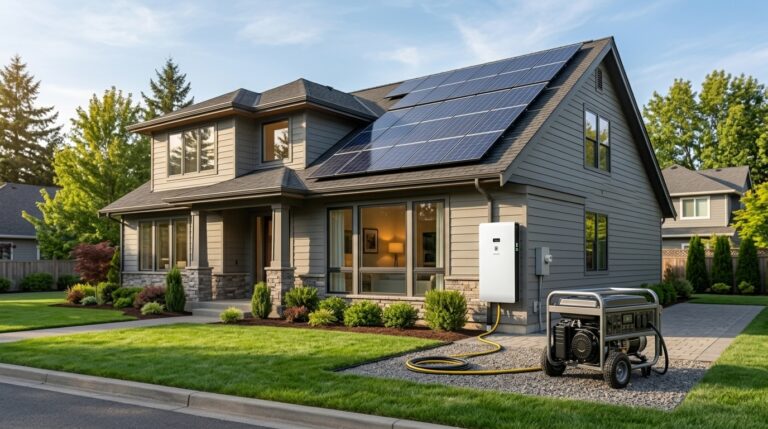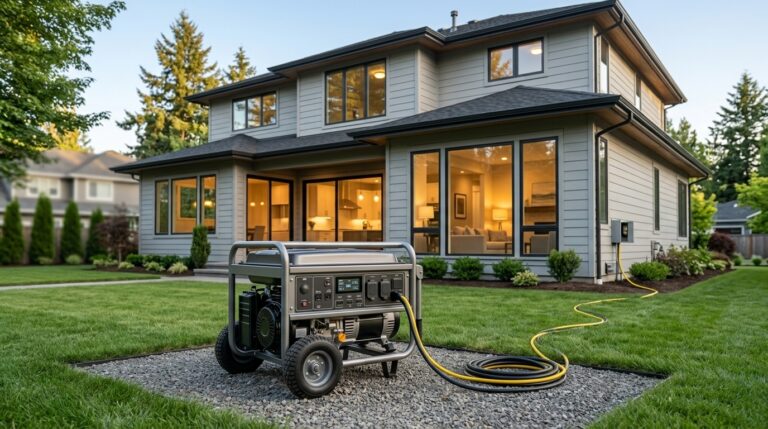
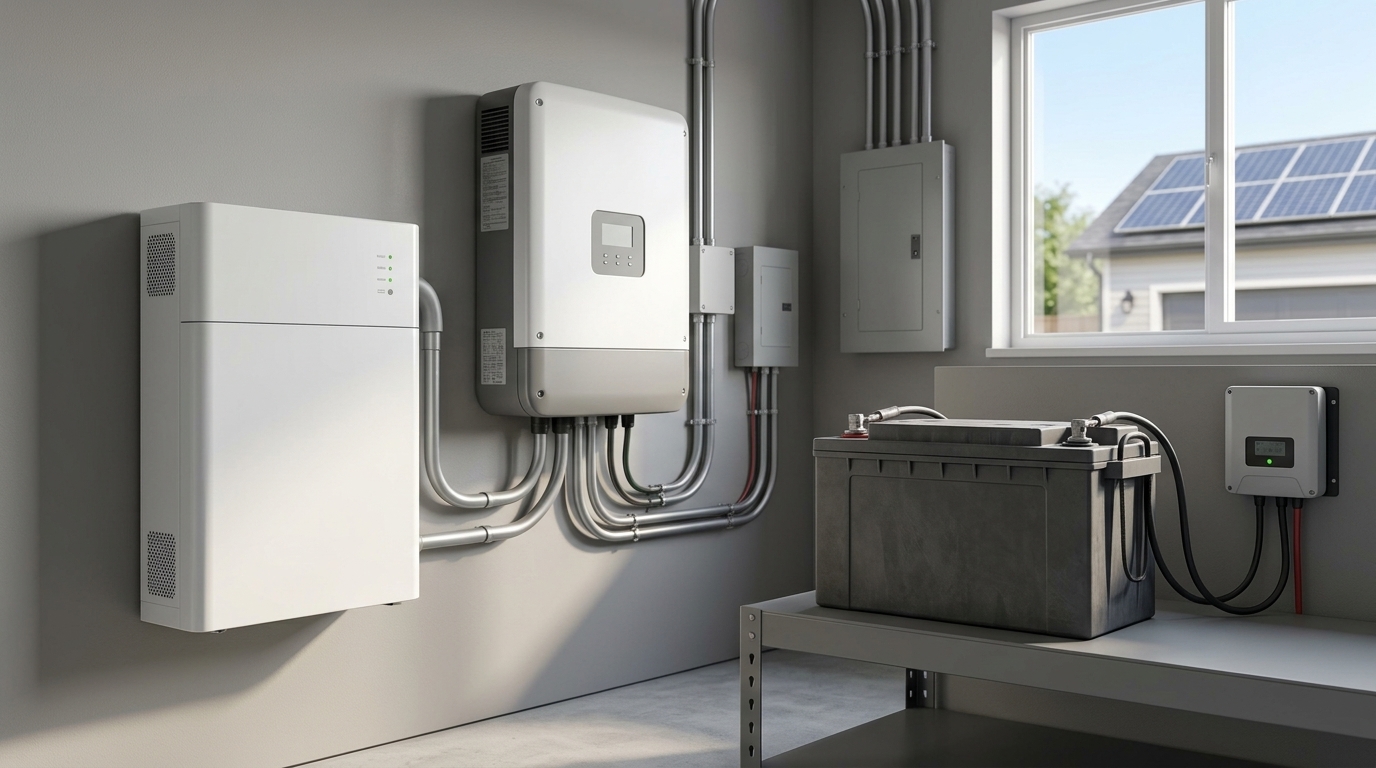
Lithium vs Lead-Acid Solar Batteries: Which Is Better in 2026?
Choosing the right battery is an important decision when installing a home solar power system. Solar batteries store electricity generated during the day so that you can use it at night, during cloudy weather, or when the utility grid is unavailable. However, not all batteries offer the same capacity, efficiency, lifespan, or long-term value.
Two of the most common options are lithium batteries and lead-acid batteries. Lithium batteries are popular for modern solar storage because they generally provide more usable energy, faster charging, and longer cycle life. Lead-acid batteries remain an option for homeowners who want a lower initial purchase price and have relatively modest backup requirements.
So, lithium vs lead-acid solar batteries: which is better in 2026? The answer depends on your budget, electricity consumption, backup requirements, charging conditions, and how frequently you plan to use the battery.
This guide compares both technologies in detail, explains their advantages and disadvantages, and helps you choose the right battery for your home solar system.
Lithium vs Lead-Acid Solar Batteries: Quick Comparison
Lithium and lead-acid batteries store electricity through different chemical processes. These differences affect their weight, usable capacity, charging behavior, maintenance requirements, and expected service life.
For residential solar storage, the most relevant comparison is usually between lithium iron phosphate (LiFePO4) batteries and deep-cycle lead-acid batteries.
| Feature | Lithium (LiFePO4) | Lead-Acid |
|---|---|---|
| Initial purchase cost | Usually higher | Usually lower |
| Usable capacity | Generally higher | Usually more limited for long life |
| Cycle life | Commonly several thousand cycles | Typically fewer cycles |
| Charging speed | Generally faster | Usually slower, especially near full charge |
| Energy efficiency | Generally higher | Generally lower |
| Weight | Lighter for comparable usable energy | Heavier |
| Maintenance | Usually minimal | Flooded types need regular maintenance |
| Space requirements | Usually more compact | Often bulkier |
| Battery management | Built-in BMS is common | Charging controls are essential |
| Deep daily cycling | Generally well suited | Can shorten service life |
| Occasional backup | Excellent option | Can be cost-effective |
| Long-term value | Often better for frequent use | May suit limited budgets and lighter use |
These are general comparisons, not guarantees for every product. Performance depends on battery quality, design, temperature, charging settings, discharge depth, and warranty conditions.
Quick verdict: LiFePO4 is often the stronger choice for a solar system that charges and discharges daily. Lead-acid may still make sense when the initial budget is the main concern and the battery will be used less frequently.
What Is a Lithium Solar Battery?
A lithium solar battery stores electricity using lithium-based electrochemical cells. Several lithium-ion chemistries exist, but lithium iron phosphate, commonly called LiFePO4 or LFP, is especially relevant to stationary home energy storage.
LiFePO4 batteries are designed for repeated charging and discharging. They typically provide a high proportion of their rated capacity for everyday use and can deliver many charge-discharge cycles when operated within their specified limits.
How Does a Lithium Solar Battery Work?
During the day, solar panels generate electricity. The solar inverter or battery charging equipment directs suitable surplus electricity into the battery.
When solar production falls or household demand rises, the battery can release stored energy to supply compatible loads.
A lithium battery typically includes a battery management system (BMS). This electronic system monitors important operating conditions and helps protect the battery against issues such as overcharging, excessive discharge, excessive current, and unsuitable temperatures.
The exact protection functions depend on the battery design and BMS.
Advantages of Lithium Solar Batteries
1. Higher Usable Capacity
Lithium batteries commonly allow a greater percentage of their rated capacity to be used than lead-acid batteries without excessively shortening their service life.
This means you may need a smaller nominal lithium battery to supply the same amount of usable energy.
For households with limited installation space, this can be a significant advantage.
2. Longer Cycle Life
A battery cycle represents a charge and discharge process, although manufacturers define test conditions differently.
LiFePO4 batteries commonly offer thousands of cycles under specified conditions. Their actual service life depends on discharge depth, operating temperature, charge settings, and battery quality.
A longer cycle life can be particularly valuable when the battery is used every day to store solar electricity.
3. Faster Charging
Lithium batteries can often accept higher charging rates than comparable lead-acid batteries, provided the battery, inverter, and temperature conditions allow it.
This can help a solar system capture more available energy during a limited period of strong sunlight.
However, charging speed is also restricted by the inverter, solar array output, BMS limits, and other household loads.
4. Higher Energy Efficiency
Lithium batteries generally return a larger proportion of the electricity used to charge them.
Lower losses can improve the amount of solar electricity available for later household use.
The actual round-trip efficiency depends on the battery, inverter, operating load, temperature, and how the system is measured.
5. Less Routine Maintenance
Most residential LiFePO4 batteries are sealed systems that do not require routine water top-ups.
They still need proper installation, monitoring, and attention to temperature and operating conditions, but their routine maintenance burden is generally low.
6. Compact Design
Lithium batteries usually provide more usable energy for a given weight and installation space than lead-acid batteries.
This can make wall-mounted or modular battery installations easier to accommodate, provided the wall or mounting structure is suitable for the equipment.
7. Consistent Power Delivery
Lithium batteries generally maintain a relatively stable voltage over much of their usable discharge range.
This can help compatible inverters operate consistently, although the final result depends on the battery voltage, inverter limits, and load.
Disadvantages of Lithium Solar Batteries
Lithium batteries are not perfect for every household.
- Higher upfront cost: The initial purchase price is usually higher than that of a comparable lead-acid battery.
- Compatibility requirements: The inverter must support the battery’s voltage, chemistry, current limits, and communication protocol where required.
- Temperature restrictions: Charging may need to be restricted at low temperatures, depending on the model.
- Electronic protection requirements: The BMS must be properly integrated and configured.
- Replacement expenses: A battery may eventually require replacement, even if its expected life is long.
- Product quality varies: Poor-quality cells, weak protection systems, or inadequate warranty support can reduce reliability.
For most residential applications, LiFePO4 is worth considering when frequent cycling, compact installation, and long-term value matter more than the lowest purchase price.
What Is a Lead-Acid Solar Battery?
Lead-acid batteries are a long-established rechargeable battery technology. They use lead-based electrodes and an electrolyte to store and release electrical energy.
They have been used for decades in backup power systems, uninterruptible power supplies, vehicles, and off-grid energy installations.
Several lead-acid battery designs are available, including flooded, AGM, and gel batteries. Their maintenance requirements, charging behavior, and suitability for repeated deep discharge differ.
Types of Lead-Acid Batteries
1. Flooded Lead-Acid Batteries
Flooded batteries contain a liquid electrolyte and usually require an upright installation.
Some models need periodic electrolyte-level checks and distilled-water top-ups. They must be installed in an appropriate, well-ventilated location because charging can release hydrogen gas.
Best for: Cost-conscious installations where regular maintenance is acceptable and suitable ventilation is available.
2. AGM Batteries
Absorbent Glass Mat (AGM) batteries hold the electrolyte in an absorbent glass-fiber separator. They are generally sealed and do not require routine water top-ups under normal operation.
AGM batteries are convenient for some backup applications, but repeated deep cycling can still shorten their service life if the battery is not designed for that duty.
Best for: Backup systems that need a sealed, relatively low-maintenance lead-acid battery.
3. Gel Batteries
Gel batteries use an electrolyte thickened into a gel-like form. They are also generally sealed.
They require appropriate charging settings because excessive charging voltage can damage the battery. A charger configured for the wrong lead-acid type may reduce performance or shorten service life.
Best for: Applications where a compatible gel battery’s charging characteristics and installation requirements suit the system.
4. Deep-Cycle and Tubular Lead-Acid Batteries
Deep-cycle batteries are designed to supply energy over longer periods rather than deliver only short bursts of starting current.
Tubular designs are used in some residential solar and backup applications, particularly in markets where they are widely available.
However, not every lead-acid battery is suitable for repeated solar cycling. Always check the specific battery’s cycle-life data and permitted discharge depth.
Advantages of Lead-Acid Solar Batteries
1. Lower Initial Cost
Lead-acid batteries generally have a lower purchase price than lithium batteries with comparable nominal energy capacity.
This can make them attractive when the household has a limited upfront budget.
However, the purchase price alone does not reveal the cost of usable energy over the battery’s entire life.
2. Established Technology
Lead-acid batteries have a long history of use in backup power and are widely understood by many battery installers and technicians.
Availability, replacement options, and repair support depend on the local market.
3. Broad Product Availability
Many regions have established supply chains for lead-acid batteries, including replacement units and charging equipment.
This can make it easier to source a suitable battery in locations where lithium products or qualified service providers are less accessible.
4. Suitable for Occasional Backup
A properly selected lead-acid battery may be practical for a system that experiences infrequent outages and powers only essential appliances.
The battery still needs correct charging and discharge management to avoid unnecessary wear.
Disadvantages of Lead-Acid Solar Batteries
1. Lower Usable Capacity
Lead-acid batteries are commonly operated with a more conservative discharge depth to preserve service life.
Using a large proportion of their rated capacity repeatedly can accelerate degradation, depending on the model and operating conditions.
2. Shorter Cycle Life Under Deep Cycling
Lead-acid batteries generally offer fewer deep charge-discharge cycles than well-designed LiFePO4 batteries.
In a daily solar system, this can mean replacing the battery bank more frequently.
3. Slower Charging
Lead-acid batteries often take longer to complete charging, particularly during the final absorption stage.
If solar production is limited or household loads consume much of the available energy, the battery may not reach a full charge regularly. Repeated undercharging can be harmful to some lead-acid designs.
4. More Maintenance for Flooded Models
Flooded batteries may require regular inspections, water top-ups, and cleaning of corrosion around connections.
AGM and gel batteries reduce some of these maintenance tasks, but they still need suitable charging and operating conditions.
5. Greater Weight and Space Requirements
Lead-acid batteries are heavy relative to the usable energy they provide.
A large battery bank can require a strong support surface, additional floor space, and careful planning for access and installation.
6. Ventilation and Acid-Related Risks
Flooded lead-acid batteries can release hydrogen during charging. Hydrogen is flammable, so appropriate ventilation is essential.
The electrolyte is corrosive, and damaged batteries can create additional hazards. Installation and maintenance should follow the battery manufacturer’s safety instructions.
Lithium vs Lead-Acid: Which Battery Has More Usable Capacity?
Usable capacity is one of the most important factors when comparing solar batteries.
A battery’s nominal capacity describes its rated energy storage, but you may not be able to use all of that energy regularly without affecting its life or exceeding its operating limits.
Understanding Depth of Discharge
Depth of discharge (DoD) describes the percentage of a battery’s nominal capacity that has been used.
For example, if a 10 kWh battery has supplied 5 kWh, approximately 50% of its nominal energy has been discharged, ignoring losses and other measurement details.
Many LiFePO4 systems allow a relatively high discharge depth, while lead-acid batteries are commonly operated more conservatively when long service life is the goal.
The permitted value depends on the specific product and warranty.
Example: Comparing Two 10 kWh Batteries
Suppose you are comparing a 10 kWh LiFePO4 battery with a 10 kWh lead-acid battery.
For illustration, assume the lithium battery permits 90% usable capacity and the lead-acid battery is operated at 50% usable capacity.
| Measurement | Lithium Battery | Lead-Acid Battery |
|---|---|---|
| Nominal capacity | 10 kWh | 10 kWh |
| Assumed usable percentage | 90% | 50% |
| Approximate usable energy | 9 kWh | 5 kWh |
| Energy remaining unused as a reserve | 1 kWh | 5 kWh |
These percentages are illustrative, not universal limits. Follow the specifications of the actual battery model.
In this example, the lithium battery provides approximately 80% more usable energy than the lead-acid battery with the same nominal capacity.
This is why comparing batteries solely by their rated kWh or amp-hour figures can lead to a misleading conclusion.
How Much Battery Capacity Does Your Home Need?
Estimate the energy consumption of the appliances you want to run during an outage.
For example:
- LED lighting: 0.3 kWh per evening
- Fans: 1.2 kWh
- Refrigerator: 1.5 kWh
- Television and electronics: 0.5 kWh
The combined illustrative consumption is 3.5 kWh.
If you want to cover this load for one evening, the battery must provide at least 3.5 kWh of usable AC energy. Additional capacity may be required to account for inverter losses, starting loads, reserve requirements, and changing appliance use.
For a more accurate estimate, measure the actual energy consumption of your appliances rather than relying on generic figures.
Lithium vs Lead-Acid: Lifespan and Cycle Life
Battery lifespan has a major impact on long-term value. A battery with a lower purchase price may become more expensive if it needs replacing frequently.
How Long Do Lithium Solar Batteries Last?
Many residential LiFePO4 batteries are designed for several thousand charge-discharge cycles. Depending on the model, operating conditions, and usage pattern, their calendar life may also extend over many years.
However, cycle-life claims are meaningful only when you understand the test conditions.
Check:
- The rated number of cycles.
- The depth of discharge used during testing.
- The temperature conditions.
- The remaining capacity at the end of the test.
- The warranty’s calendar-year and cycle limits.
A battery rated for a particular number of cycles is not guaranteed to achieve that number under every installation condition.
How Long Do Lead-Acid Solar Batteries Last?
Lead-acid battery lifespan varies considerably by design.
Flooded, AGM, gel, and tubular batteries may have different cycle-life ratings. Frequent deep discharge, high temperatures, poor charging, and long periods of undercharging can reduce their service life.
A lead-acid battery used only occasionally for short outages may last longer than one cycled deeply every day.
What Is More Important: Calendar Life or Cycle Life?
Calendar life refers to the passage of time, while cycle life describes performance under repeated charging and discharging.
A battery used only occasionally may reach the end of its useful life because of aging rather than reaching its rated cycle count. A battery used daily may reach its cycle limit much sooner.
For a solar system that cycles every day, cycle-life data are particularly important.
Charging Speed and Solar Energy Efficiency
The way a battery accepts and returns electricity affects how effectively your solar system uses available sunlight.
Lithium Batteries Usually Charge Faster
Lithium batteries can often accept higher charging current within their permitted operating limits.
This can be helpful when the solar array has a limited daily production window or when clouds interrupt generation.
However, the battery’s charging limit, inverter capacity, battery temperature, and BMS restrictions still determine the actual charging speed.
Lead-Acid Batteries Need Careful Charging
Lead-acid batteries generally require a controlled charging process. Many use bulk, absorption, and float stages, with charging current typically decreasing as the battery approaches full charge.
Incorrect voltage settings can damage the battery or reduce its service life.
If solar energy is insufficient to finish charging the battery regularly, performance may deteriorate, particularly for designs that are sensitive to prolonged undercharging.
What Is Round-Trip Efficiency?
Round-trip efficiency measures how much energy can be recovered from a battery compared with the energy used to charge it.
For example, if a system takes in 5 kWh of charging energy and later returns 4.5 kWh of usable energy, its round-trip efficiency for that measured process is 90%.
Lithium batteries generally have higher round-trip efficiency than lead-acid batteries, although actual results depend on the battery, inverter, operating load, and test method.
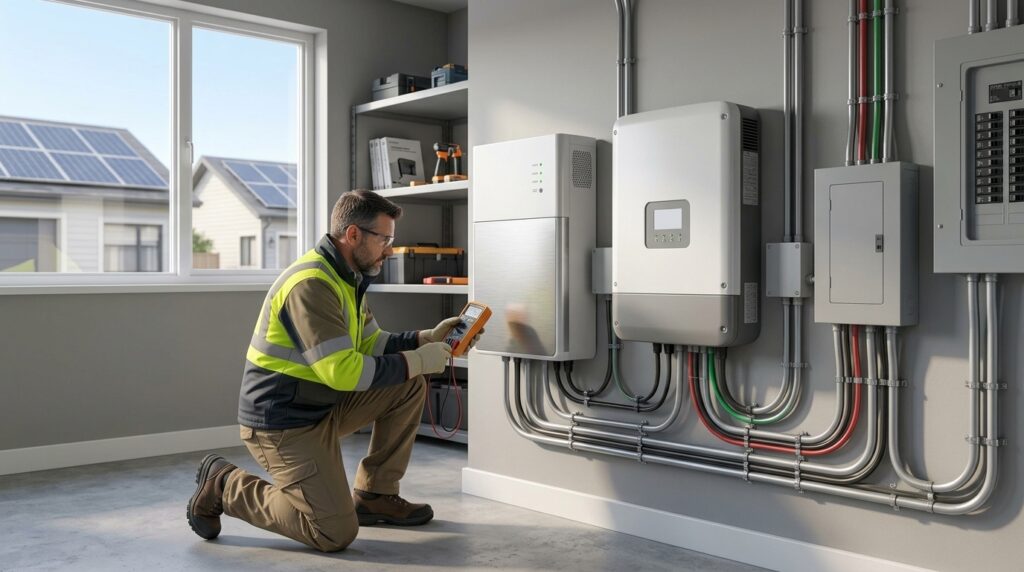
Higher efficiency means less energy is lost during storage and retrieval.
Lithium vs Lead-Acid: Which Is Cheaper Over Time?
Lead-acid batteries usually cost less to purchase, but lithium batteries may offer better long-term value because they provide more usable energy, typically last longer under frequent cycling, and require less routine maintenance.
The best financial comparison considers the full life of the system.
Initial Purchase Price
If your budget is limited, lead-acid batteries may appear more attractive because you can often purchase them at a lower upfront cost.
However, make sure you compare equivalent usable energy rather than nominal capacity alone.
A low-cost battery bank may need to be larger to provide the same usable energy as a smaller lithium battery.
Replacement Costs
If a battery bank must be replaced several times during the life of a solar system, the cost of those replacements can become substantial.
Lithium batteries may reduce replacement frequency in daily-cycling applications, but the actual result depends on the specific products and how they are used.
Maintenance Costs
Flooded lead-acid batteries may need regular inspections, distilled water, cleaning, and maintenance labor.
Lithium batteries generally require less routine maintenance, although they still need proper monitoring and occasional professional inspection.
Efficiency-Related Costs
Lower round-trip efficiency means more electricity is needed to deliver the same amount of usable energy.
This can matter when the battery is cycled frequently and solar energy is limited.
Example of a Long-Term Cost Comparison
Consider two systems designed to provide similar usable energy.
- Lithium battery system: higher initial purchase price, longer expected cycle life, and minimal routine maintenance.
- Lead-acid battery system: lower initial purchase price, more conservative usable capacity, and potentially more frequent replacement.
To compare them fairly, calculate the total cost over a chosen period.
Include:
- Initial battery purchase.
- Installation and compatible charging equipment.
- Expected replacement batteries.
- Maintenance and service costs.
- Energy losses during charging and discharging.
- Warranty coverage and any likely out-of-warranty expenses.
Do not assume that lithium always wins financially. If the battery is used very rarely, a low-cost lead-acid battery may be more economical. If it is cycled daily, lithium may provide better value over time.
Which Battery Is Better for Solar Backup During Power Outages?
The best battery for backup depends on how much power you need, how long the outage lasts, and how frequently the battery is used.
Lithium Batteries for Backup
Lithium batteries are often well suited to frequent outages because they can provide a high proportion of their rated capacity and generally recharge quickly.
They may be particularly useful when you need to power several essential appliances every day or store daytime solar production for evening use.
Before choosing a model, verify its continuous output, surge capacity, backup configuration, and compatibility with your inverter.
Lead-Acid Batteries for Backup
Lead-acid batteries can provide practical backup for essential appliances when outages are infrequent and the initial budget is limited.
To help preserve their lifespan, you may need to use a smaller proportion of their rated capacity and recharge them properly after use.
Flooded batteries also require suitable ventilation and maintenance.
Which Appliances Can Each Battery Run?
Either type can supply compatible household appliances when the battery, inverter, wiring, and protection equipment are correctly designed.
The important factors are:
- Available usable battery energy.
- Inverter continuous output.
- Appliance startup surge.
- Battery discharge-current limit.
- The number of hours of backup required.
A battery with a high kWh rating may store plenty of energy but still be unable to run a large appliance if its maximum discharge power or the inverter’s output is too low.
Lithium vs Lead-Acid for Off-Grid Solar Systems
Off-grid solar systems rely on stored energy when solar panels cannot meet household demand. Battery selection is therefore especially important.
Why Lithium Is Often Preferred for Off-Grid Systems
LiFePO4 batteries are often a strong option for off-grid installations because they provide high usable capacity and can tolerate frequent cycling when operated within their specifications.
Their relatively high charging efficiency can also help a system make better use of available solar generation.
However, off-grid reliability depends on the entire system. Even a high-quality battery can run low during extended periods of poor sunlight if storage and solar generation are insufficient.
When Lead-Acid May Still Work
Lead-acid batteries can be suitable for smaller off-grid systems with modest loads, limited budgets, and less frequent deep cycling.
The design should allow for conservative discharge, appropriate charging, and the maintenance required by the selected battery type.
Important Off-Grid Design Considerations
When designing an off-grid system, evaluate:
- Daily energy consumption.
- Solar generation during the least sunny season.
- Battery capacity and backup days.
- Inverter output and surge capability.
- Charging sources and recovery time.
- Temperature and ventilation.
- The availability of spare parts and technical support.
A reliable off-grid system needs sufficient energy generation and storage, not simply the most expensive battery.
Battery Safety: Lithium vs Lead-Acid
Both battery technologies can be used safely when correctly selected, installed, charged, and maintained. Both can also create hazards if damaged or used outside their operating limits.
Lithium Battery Safety
Lithium batteries should include an appropriate BMS and be installed according to the manufacturer’s requirements.
Important precautions include:
- Use a battery compatible with the inverter and charger.
- Follow the specified temperature limits.
- Avoid physical damage and unauthorized modifications.
- Keep the battery away from conditions prohibited by the manufacturer.
- Use correctly rated cables, breakers, and protective equipment.
- Ensure the installation allows any required ventilation and service access.
LiFePO4 is generally considered more thermally stable than some other lithium-ion chemistries, but it is not risk-free. Product quality and correct installation remain essential.
Lead-Acid Battery Safety
Lead-acid batteries contain corrosive electrolyte, and charging may release hydrogen gas.
For flooded batteries:
- Provide suitable ventilation.
- Keep the battery upright and secured.
- Prevent sparks, flames, and smoking near the charging area.
- Wear suitable protective equipment when maintenance is required.
- Use distilled water when specified by the manufacturer.
- Keep children and unauthorized people away from the installation.
Sealed AGM and gel batteries reduce routine electrolyte handling but still require correct charging and protection.
Which Battery Is Safer?
There is no single answer for every installation. LiFePO4 offers important thermal-stability advantages over some other lithium chemistries, while lead-acid has its own risks involving acid, gas generation, weight, and electrical faults.
Choose a quality product with appropriate protection and have the system installed by a qualified professional.
How to Choose the Right Solar Battery for Your Home
Before purchasing either type, assess your energy requirements and the way you plan to use the battery.
Step 1: Calculate Your Daily Backup Needs
List the appliances you want to power during an outage and estimate their energy consumption in kWh.
Decide whether you need backup for a few hours, an entire evening, or a longer period.
Step 2: Determine the Required Usable Capacity
Choose a battery that can deliver the required energy without regularly exceeding its recommended discharge depth.
Allow for inverter losses, reserve capacity, and changes in household consumption.
Step 3: Check Battery Power Output
Confirm that the battery can supply the required current and that the inverter can handle your simultaneous loads and startup surges.
Step 4: Verify Inverter Compatibility
Check the battery voltage, charging limits, discharge limits, communication requirements, and supported battery models.
Step 5: Compare the Warranty
Review the warranty duration, cycle limits, remaining-capacity conditions, and installation requirements.
A longer advertised lifespan is not a substitute for clear warranty terms.
Step 6: Calculate Total Cost of Ownership
Compare the upfront price, usable energy, expected service life, replacements, maintenance, and energy losses.
This gives a more meaningful picture than comparing the initial price alone.
Step 7: Consider Local Support
Check the availability of replacement batteries, compatible inverters, trained technicians, and warranty service in your area.
Local support can be particularly important if the battery is a central part of your home’s backup power system.
Frequently Asked Questions About Lithium vs Lead-Acid Solar Batteries
1. Which is better for solar: lithium or lead-acid?
For many modern solar systems that charge and discharge daily, LiFePO4 lithium batteries are the stronger option because they generally offer higher usable capacity, longer cycle life, faster charging, and less routine maintenance. Lead-acid may be more suitable when upfront cost is the main priority and use is occasional.
2. Do lithium solar batteries last longer than lead-acid batteries?
LiFePO4 batteries generally provide more charge-discharge cycles than lead-acid batteries under comparable daily-cycling conditions. Actual lifespan depends on product quality, temperature, discharge depth, charging, and warranty conditions.
3. Are lithium solar batteries worth the extra cost?
They can be worth the additional upfront investment when the battery is used frequently. Higher usable capacity, longer cycle life, and lower maintenance may improve long-term value. For occasional backup, a lower-cost lead-acid battery may still be practical.
4. Can I replace a lead-acid battery with a lithium battery?
Sometimes, but the existing inverter or charger must support the lithium battery’s voltage, charging profile, current limits, and any required communication protocol. The physical installation and protective equipment may also need changes.
Do not assume that a lithium battery can be connected safely just because its nominal voltage is similar.
5. Can lithium batteries charge faster than lead-acid batteries?
Generally, yes, when the battery and charging equipment support the required current. Actual charging speed depends on the battery’s limits, state of charge, temperature, available solar power, and inverter capability.
6. Do lead-acid batteries need maintenance?
Flooded lead-acid batteries commonly need periodic inspections and distilled-water top-ups. AGM and gel batteries generally do not require routine water top-ups, but all lead-acid batteries need appropriate charging, protection, and operating conditions.
7. Can a lithium battery run an air conditioner?
It may be able to, provided its usable energy and discharge power are sufficient and the inverter can handle the air conditioner’s running load and startup requirements. Battery capacity alone does not determine whether an appliance can be operated.
8. Are lithium batteries safe for indoor installation?
Some lithium battery products are designed for indoor installation, but the location must comply with the manufacturer’s instructions and applicable local requirements. Temperature, fire safety, mounting, ventilation requirements, and electrical protection should all be considered.
9. What is LiFePO4?
LiFePO4 stands for lithium iron phosphate, a lithium-ion battery chemistry commonly used in stationary energy storage. It is valued for its cycle-life potential and thermal stability relative to some other lithium-ion chemistries.
10. Which battery is better for Pakistan’s solar systems?
The best choice depends on the home’s load, outage frequency, budget, local availability, and inverter compatibility. LiFePO4 can be attractive for daily solar cycling and frequent backup use, while tubular lead-acid batteries may suit more budget-conscious installations with modest energy needs.
11. Is a 100Ah lithium battery equal to a 100Ah lead-acid battery?
Not necessarily. Amp-hours measure electrical charge, not energy by themselves. You must compare voltage, usable discharge depth, losses, and the battery’s permitted operating range to estimate usable energy.
12. Can I use lithium and lead-acid batteries together?
Mixing different battery chemistries in the same battery bank is generally not recommended unless the system is specifically engineered and approved for that arrangement. Their charging requirements and voltage behavior differ. Use a compatible battery configuration specified by the inverter and battery manufacturers.
Final Verdict: Lithium vs Lead-Acid Solar Batteries in 2026
Lithium and lead-acid batteries can both store solar electricity, but they suit different budgets and usage patterns.
Choose LiFePO4 lithium batteries if you want high usable capacity, frequent daily cycling, faster charging, less routine maintenance, and potentially better long-term value.
Choose lead-acid batteries if the upfront budget is limited, backup use is relatively occasional, and you can accommodate their weight, maintenance requirements, and more conservative usable capacity.
Before deciding, compare usable kWh rather than nominal capacity alone. Review the battery’s cycle-life conditions, charging limits, warranty, inverter compatibility, and expected replacement costs.
The best solar battery is not simply the one with the lowest purchase price. It is the one that safely meets your energy needs and delivers the best value over the time you plan to use it.