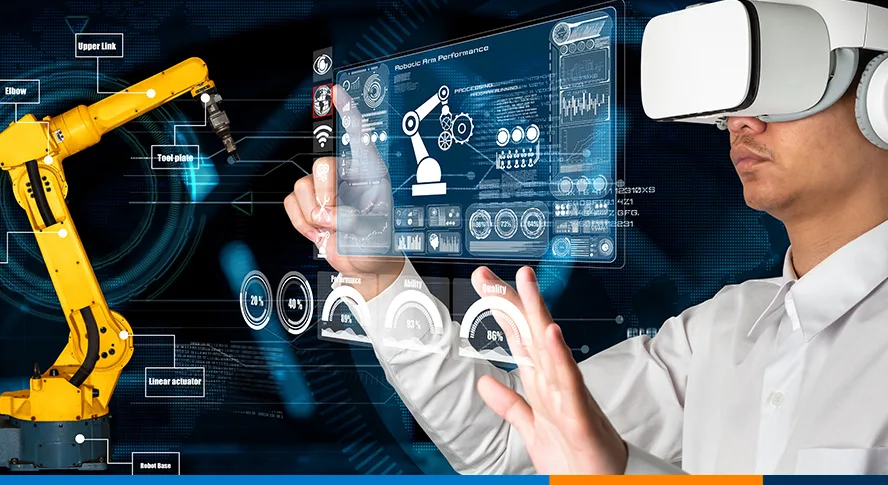
We are moving away from the era of “looking at a screen” and toward an era of “living inside the data.” Spatial Computing, popularized by devices like the Apple Vision Pro and Meta Quest series, merges digital content with our physical environment.
The Convergence of AR and VR
Spatial computing is distinct from traditional Virtual Reality (VR) because it prioritizes Augmented Reality (AR)—or “Passthrough”—allowing users to stay present in the real world while digital “windows” or 3D objects float around them.
- In Manufacturing: An engineer can see a 3D blueprint overlaid directly onto a physical engine, highlighting which part needs repair.
- In Education: History students can “walk” through a digitally reconstructed ancient Rome while sitting in their classroom.
The Challenge of “Digital Exhaust”
The technical hurdle for spatial computing isn’t just the display; it’s the mapping. To place a digital object on your coffee table, the device must constantly scan your room. This creates a massive amount of “spatial data.” Protecting the privacy of our physical homes from the companies that build these headsets is the next great battleground for consumer advocates. As the hardware shrinks from bulky goggles to sleek glasses, spatial computing will eventually replace the smartphone as our primary window to the world.