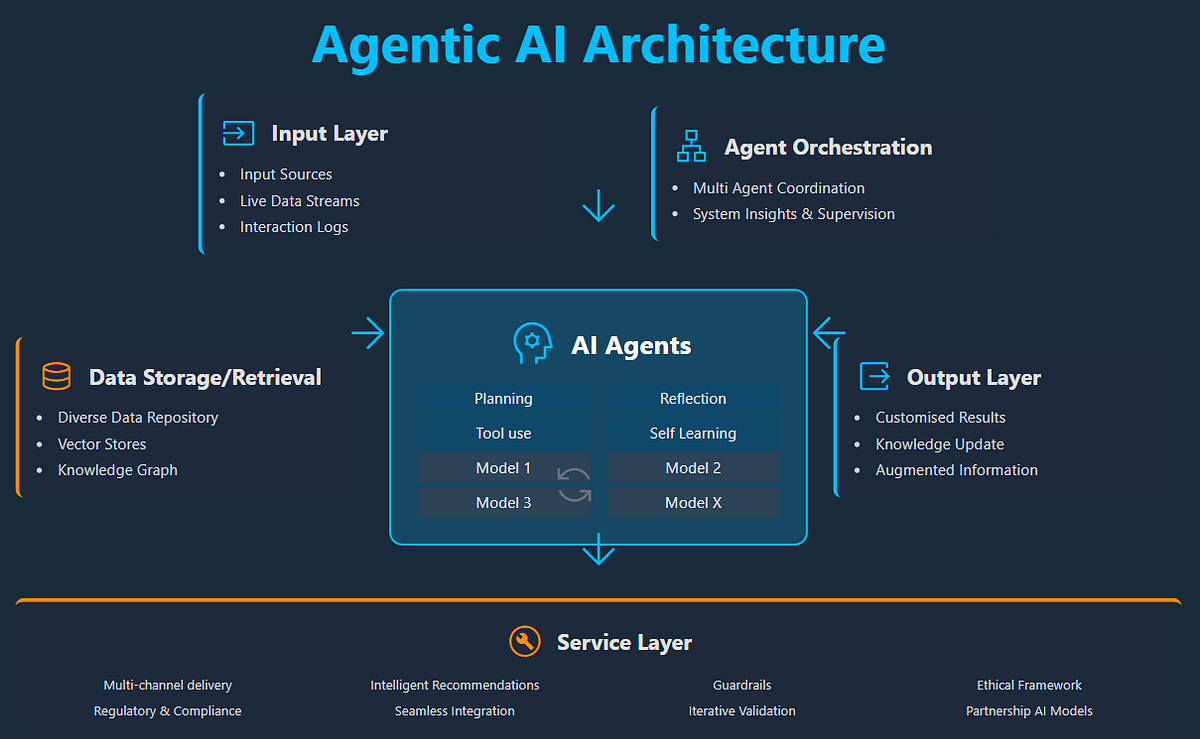
For the past few years, the world has been captivated by “Conversational AI”—models that can write essays, summarize emails, or generate poetry. However, we are now entering the era of Agentic AI, a fundamental shift from AI as a “consultant” to AI as a “worker.”
From Prompting to Goal-Setting
Traditional LLMs (Large Language Models) are reactive; they wait for a prompt and provide a static output. Agentic AI, however, is goal-oriented. If you tell a traditional AI, “Find me a flight to London,” it gives you a list. If you tell an AI Agent the same thing, it logs into your travel portal, compares prices against your calendar, checks your seat preferences, and completes the purchase.
This leap requires a complex integration of:
- Reasoning Loops: The ability for the AI to “think” in steps (e.g., “If step A fails, I must try strategy B”).
- Tool Use: The capacity to interact with software APIs, web browsers, and databases.
- Memory Management: Distinguishing between short-term task data and long-term user preferences.
The Impact on the Global Workforce
The transition to agentic systems is sparking a debate about the “Automated Economy.” While critics fear widespread job displacement, proponents argue that these agents will handle the “digital drudgery”—data entry, scheduling, and basic troubleshooting—allowing humans to focus on high-level strategy and creative oversight. The challenge for 2026 and beyond will be establishing “Human-in-the-Loop” (HITL) protocols to ensure these agents don’t make critical errors without supervision.